Architecture / Civil Engineering
Making the invisible ground visible through data science
Faculty of Architecture and Urban Design ProfessorSHUKU Takayuki

All English text on this page has been translated automatically. Some sentences may be unnatural.
Even at this very moment, we live our lives using electricity as naturally as we breathe. It is now impossible to even imagine a life without electricity. That electricity is generated by various power plants across Japan, one of which is nuclear power plants. Although debates continue over issues such as safety and the nuclear fuel cycle, it is an undeniable fact that nuclear energy can produce enormous amounts of power from a small amount of fuel and is an environmentally friendly energy source. Advancing research on the development of safer and more efficient reactor technologies, as well as on the application of nuclear technology across a wide range of fields, is Professor Naoyuki Takaki of the Nuclear Systems Laboratory, Faculty of Science and Engineering.
Both thermal power generation and nuclear power generation operate on the same basic principle: heat is used to boil water into steam, and the steam drives turbines to generate electricity. Thermal power plants obtain heat by burning fossil fuels such as oil, coal, and natural gas, and as a result emit large amounts of carbon dioxide. Nuclear power generation, on the other hand, uses the heat produced when uranium—one of the heaviest naturally occurring metallic elements—undergoes nuclear fission, and therefore releases almost no greenhouse gases during power generation.
In addition, Japan, a country with limited natural resources, relies on overseas imports for most of its fossil fuels, which carries the risk that international circumstances could make it impossible to import the very materials needed for power generation.
“Uranium must also be imported, but it can produce a tremendous amount of energy from a very small quantity. Once loaded into a reactor, it can continue generating electricity for a full year without replacement. It is an extremely high-energy-density fuel.”

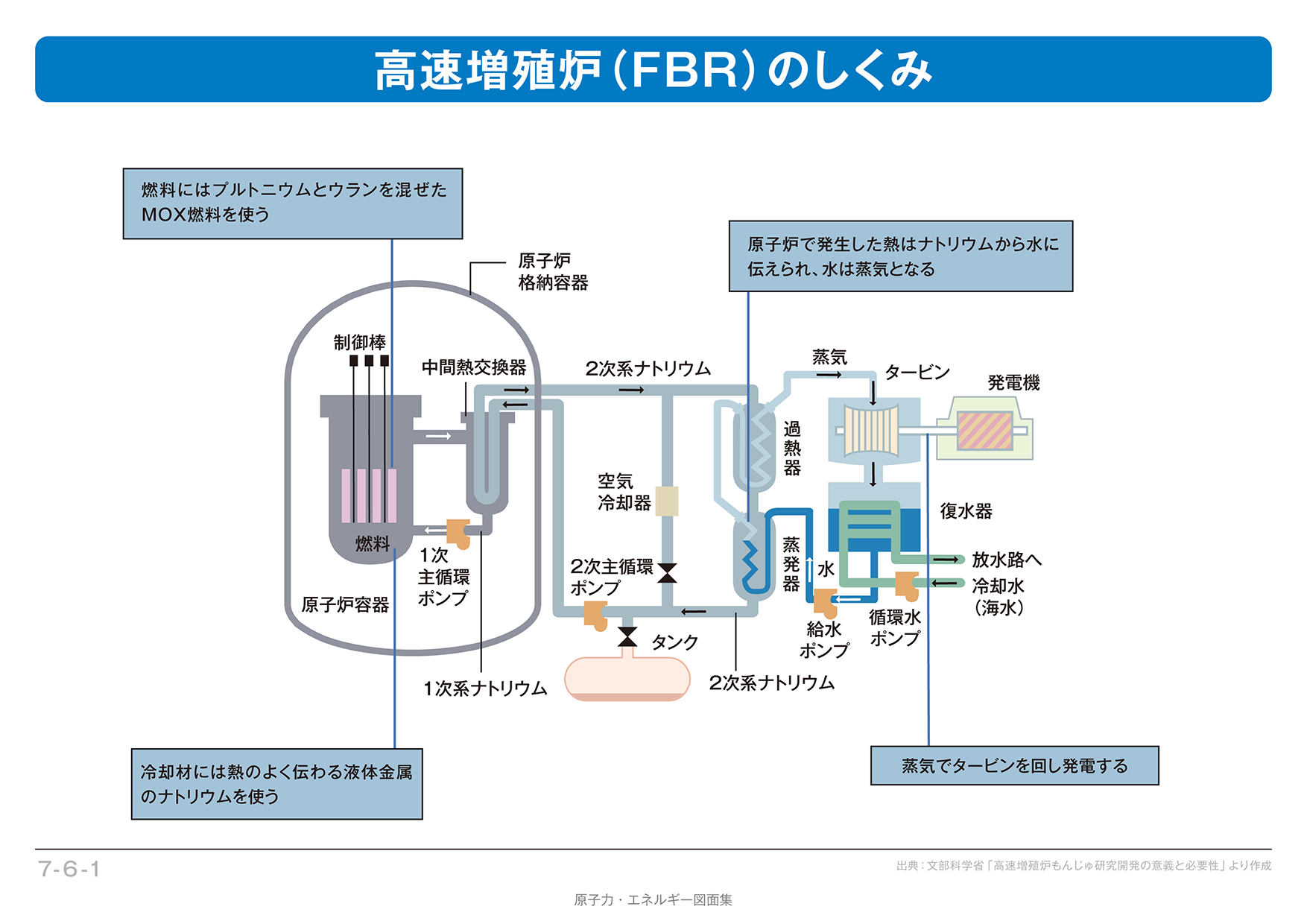
Professor Takaki’s primary research focus is the design of innovative reactors, particularly fast breeder reactors (FBRs). The most widely used type of reactor in the world today is the light water reactor. In light water reactors, ordinary water (light water) is used in two roles: as a moderator and as a coolant.
When uranium undergoes nuclear fission, extremely fast particles called neutrons are released. In order for the reaction to continue, the speed of these neutrons must be reduced. This is the role of the moderator. When neutrons collide with the hydrogen nuclei in water molecules, their motion is slowed, allowing the reaction to proceed in a stable manner. At the same time, the water absorbs the heat generated by the reaction and carries it away as a coolant.
Fast breeder reactors, on the other hand, use uranium-238, a type of uranium that does not readily undergo fission, as a fuel source. When uranium-238 absorbs a neutron, it is transformed into plutonium, which is a readily fissionable fuel. In other words, a fast breeder reactor can produce new fuel while generating electricity. Because it uses fast neutrons and increases the amount of fuel, it is called a “fast breeder reactor.”
Instead of water, liquid metals such as sodium are used as the coolant. While water slows down neutrons, liquid metals do not, and they are resistant to boiling even at high temperatures. However, liquid sodium ignites upon contact with air, which means it must be handled with extreme care. In addition, the system is more complex than that of light water reactors, making continued research and development essential for practical implementation.
“Fast breeder reactors can produce more fuel than they consume, which means that even the uranium Japan has already imported could continue to supply energy for several hundred years. Furthermore, liquid sodium can continue cooling the reactor core through natural circulation even in the event of a loss of power for cooling. These features are why fast breeder reactors have long been called a ‘dream energy.’
Japan has the experimental reactor Jōyō and the prototype reactor Monju. Although Monju was decommissioned in 2016, research and development have not been halted. A demonstration reactor, one step away from a commercial reactor, is scheduled to be constructed within the next decade.”
Professor Takaki’s laboratory is also engaged in research applying nuclear and nuclear transmutation technologies. One such project focuses on developing a method to produce actinium-225 (Ac-225), the active pharmaceutical ingredient used in a cancer treatment known as targeted alpha therapy.
Radiation therapy is one of the established methods for treating cancer. In recent years, targeted alpha therapy has attracted particular attention as a technique in which alpha particles, a form of radiation, are delivered directly inside tumors to destroy cancer cells. Ac-225 has been shown to be effective against a wide range of cancers, but because it does not exist naturally, it must be artificially produced. This is where nuclear reactors are used.
“The global supply of Ac-225 is extremely limited. There is active discussion around the world about how to produce it. Our research has shown that large-scale production of Ac-225 is possible using the fast experimental reactor Jōyō. Demonstration experiments are scheduled to begin by the end of next fiscal year. Nuclear reactors are not only for generating electricity—they can also be applied to medicine.”
Nuclear technology is attracting attention as an indispensable foundational technology for both space exploration and lunar development, and Professor Takaki’s laboratory is pursuing a wide range of research projects that apply nuclear technology to space.
Nuclear-powered rockets, which are responsible for transportation in space exploration, are said to have higher propulsion efficiency than the chemical rockets currently in use, enabling a significant reduction in travel time. This makes it possible to reduce astronauts’ exposure to radiation and allows for more flexible mission planning.
Nuclear power is also expected to play a key role in lunar development, which is being actively researched around the world. On the Moon, day and night each last for about 14 days, making it impossible to operate a base using solar power alone. By constructing nuclear reactors on the lunar surface, stable electricity can be supplied around the clock, supporting future sustainable activities on the Moon such as life-support systems, resource extraction, and residential facilities.
“There is also research on nuclear batteries. This is a technology that has been under development in the United States for several decades, and Japan has fallen behind. Space probes traveling far beyond where sunlight can reach are still able to communicate with Earth because they use these nuclear batteries.”

When people hear the word “nuclear,” many recall past nuclear power plant accidents and feel a sense of fear stemming from radiation, which is invisible and cannot be physically sensed. The accident at the Fukushima Daiichi Nuclear Power Plant in 2011 is still fresh in public memory. When asked how such anxiety and fear should be understood, Professor Takaki referred to a well-known remark by physicist and essayist Torahiko Terada:
“It is easy to be either not afraid enough or too afraid, but it is difficult to be afraid in the proper way.”
“Neither a lack of fear nor excessive fear is healthy. As with anything, the first step is to understand correctly. There is inevitably a gap between experts and the general public in terms of tolerance for risk. What exactly is dangerous, and what is safe? What should we be careful about?
In today’s information-saturated society, it is essential to acquire accurate information and develop the habit of thinking logically for oneself. That is why I actively communicate about nuclear energy through the media. Going forward, I believe it will be important for Japan as a whole to cultivate objective and rational judgment—that is, scientific literacy.
The energy of the Sun is produced by nuclear fusion. Radium is found in hot springs that are often referred to as radium springs, and our own bodies contain radioactive potassium. Nuclear energy exists closer to our daily lives than many people realize.”
Professor Takaki is originally from Hiroshima Prefecture and says that he often heard about nuclear weapons from an early age. When asked why he chose to pursue research in the field of nuclear energy, he explains:
“From a young age, I felt how overwhelming nuclear energy is—the same energy that turned the city of Hiroshima into ruins in an instant. I began to think that if this enormous energy could be used peacefully and effectively, it might become something that benefits the world. That idea was what led me to choose this path.
During my time as a company employee, I worked in reactor design, but I also spent my weekends writing academic papers and books. After working for an electric power company, I came to the university, but it is true that nuclear energy does not have a very positive image in many places. When speaking to students, I explain that nuclear technology can be applied not only to power generation, but also to fields such as medicine and space exploration.
Nuclear energy is a field that will require even more research in the future, and I hope many people will take an interest in it.”
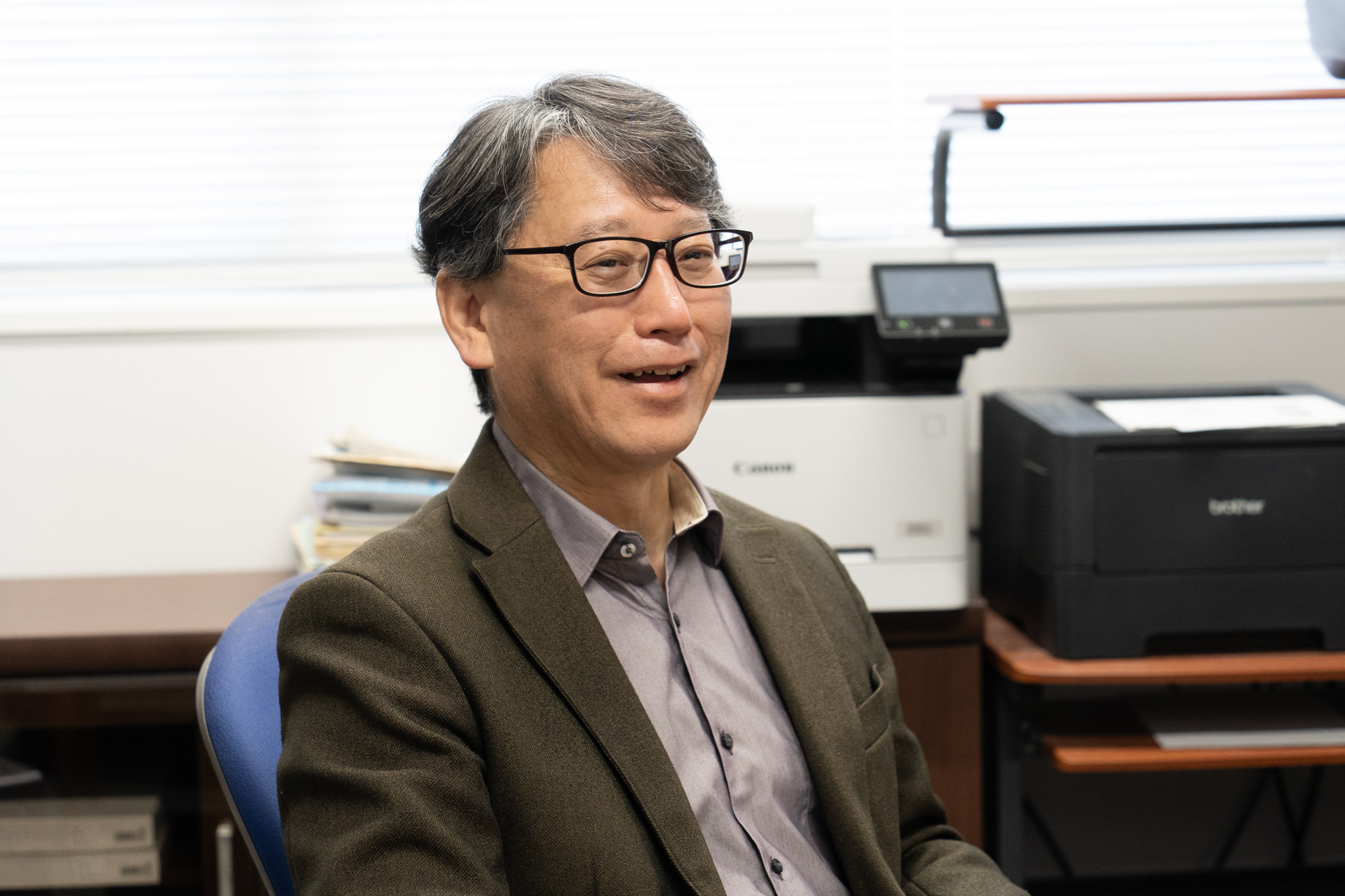
While confronting the complex debates surrounding nuclear energy head-on, Professor Takaki continues to advance technological development and communicate its potential to society with calm clarity and care. By clearly illustrating the roles that nuclear energy plays across a wide range of fields—including power generation, medicine, and space exploration—and by emphasizing the importance of decision-making based on scientific understanding, he embodies the very spirit of a dedicated researcher.
With a firm commitment to the peaceful use of nuclear energy at the core of his work, he continues today to pursue research and outreach that look toward the future of energy and society.

Professor, Department of Nuclear Safety Engineering, Faculty of Science and Engineering; Joint Nuclear Engineering Program, Graduate School of Integrative Science and Engineering. He completed the doctoral program in Nuclear Engineering at the Graduate School of Science and Engineering, Tokyo Institute of Technology in 1992, receiving a Ph.D. in Engineering. In the same year, he joined Tokyo Electric Power Company. After serving as Professor in the Department of Nuclear Engineering, Faculty of Engineering, Tokai University from 2008, he assumed his current position in 2012.