Architecture / Civil Engineering
Turning human wisdom into data to build the future of construction
Advanced Research Laboratories Specially-apointed professorYABUKI Nobuyoshi

The leaflet of "KURASHI-KATA-NO-AYA".
All English text on this page has been translated automatically. Some sentences may be unnatural.
Global warming and environmental destruction are among the most pressing challenges facing human society today. The burning of fossil fuels has increased carbon dioxide levels, causing extreme weather events around the world, while deforestation and ocean pollution continue to inflict serious damage on ecosystems. Technological innovation has brought many products and services with a lower environmental footprint, but achieving a sustainable society requires us to reexamine the way we live — our lifestyles — and reduce our energy consumption and environmental impact. Professor Ryuzo Furukawa of the Faculty of Environmental Studies is dedicated to researching the creation of new lifestyles within a society that operates under environmental constraints.
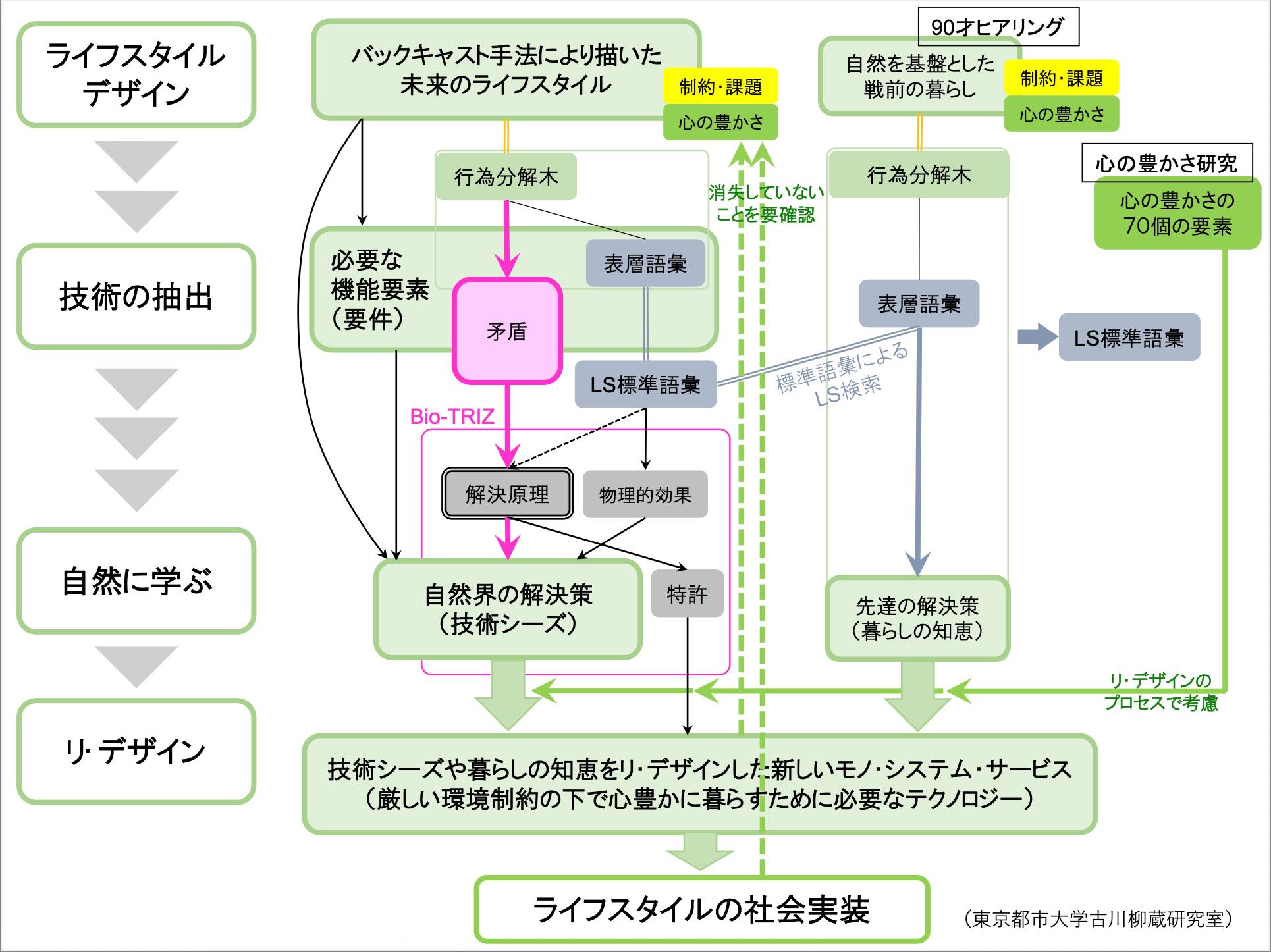
Professor Furukawa describes the shift to a new way of living as “lifestyle innovation,” and pursues its study from multiple angles. One approach is “backcasting.” Rather than imagining a future as a simple extension of the present, backcasting involves accepting the various constraints expected to arise and designing the kind of future we want to see. From that desired future, we identify what problems need to be solved and explore ways to address them — working backward from the ideal to determine what actions we should take today. “The idea is to first design the future lifestyle we want, and then figure out how to get there — that’s the backcasting approach. We also work with companies, local governments, and residents to think about the future together.”
Professor Furukawa also explores applying the low-impact technologies and structures found in nature to human life. For example, the wings of the giant darner dragonfly have serrated edges that create small vortices, allowing air to flow more smoothly and generating powerful lift. Wind turbines modeled on this wing structure can begin rotating even in light winds, making wind power generation more accessible. Similarly, tiles designed after termite mounds create comfortable spaces with minimal humidity fluctuation — because the earthen walls of termite mounds are covered in tiny pores that automatically absorb and release moisture. “Nature sustains itself without oil or other resources. I believe that if we apply those same principles to human life, we can live in a far more sustainable way. The concept of drawing on the structures of living organisms to transform our lifestyles is what I call Nature Technology.”
The large-scale research project that Professor Furukawa has continued for 17 years is the “90-Year-Old Hearing.” This study involves interviewing elderly individuals around the age of 90 who lived through the prewar era, with the aim of extracting insights for a sustainable lifestyle going forward. Over the past 17 or more years, interviews have been conducted with more than 600 people across Japan, gathering a wealth of practical wisdom on topics such as food, resource use, community relationships, and how people engaged with nature. Participants are reached through trusted channels such as local government offices or personal introductions, and interviews are conducted at their homes over approximately two hours, carefully drawing out the realities of daily life. Being at home — surrounded by photo albums and traces of a life lived — often prompts family members to listen in from the next room, and the setting helps stir memories. On occasion, even bedridden individuals have rallied with remarkable energy. “I believe the prewar way of life holds hints for how we might live in the future. Back then, people used almost no energy. Resources were limited, and people made do with what they had — self-sufficiency was the norm. That kind of lifestyle is actually very close to the constraints we’ll face going forward. What the healthy 90-year-olds seem to have in common is a positive mindset — a willingness to find joy in what’s possible, even when things are scarce.”
This kind of lifestyle transformation is also becoming an important theme in food. Professor Furukawa is currently involved in a national research project aimed at shifting Japan’s food system toward greater sustainability, conducting research into behavior change among both consumers and producers. Of particular importance to him is the value embedded in regional food culture and local cuisine. He is also engaged in recording and sharing traditional local dishes through video — an effort that goes beyond mere preservation of recipes, serving as a way to pass on to future generations the knowledge of local natural environments, resource use, and everyday wisdom. “Local cuisine carries a whole range of values within the cooking process itself — things like self-sufficiency, and using every part of a vegetable rather than throwing anything away. Beyond uploading cooking videos, we hold workshops on traditional dishes, encouraging people not just to recreate them but to adapt them to their own tastes. We’ve also created items like expiry-date reminder goods linked to the videos, to help normalize the habit of using them in daily life.”
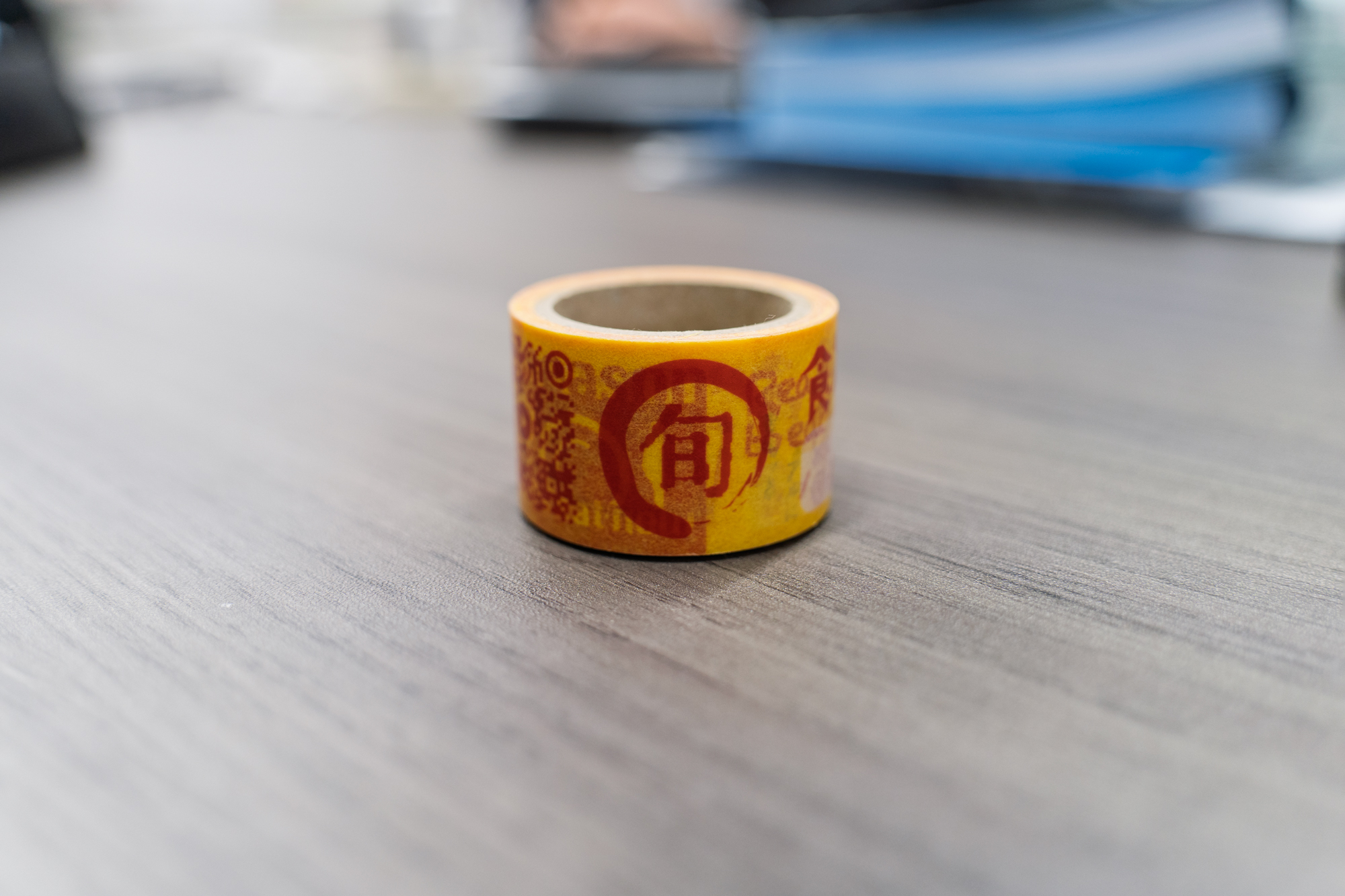
Professor Furukawa points to the establishment of new lifestyles as one of the major challenges ahead. We have grown accustomed to lives of convenience, and facts alone — or a sense of crisis — are rarely enough to change behavior. With that in mind, he has been working to make prewar ways of living more approachable and accessible. By systematically organizing the stories gathered through the 90-Year-Old Hearings and publishing them as books, he is bringing to light the values of everyday prewar life that had previously gone unrecorded. He also creates opportunities for broader audiences to encounter those values through radio appearances, rakugo performances, and exhibitions. To help root this wisdom in contemporary life, he has developed an initiative called “Kurashikata no Aya” (The Weave of Ways of Living). The beauty and values of everyday life drawn from the stories of 90-year-olds are expressed through short phrases and patterns, then shared with society through design, products, and exhibitions. Values that might not reach people through text or theory alone can spark genuine interest and self-reflection when approached through beauty and emotional resonance. “Kurashikata no Aya” has been highly regarded as an effort to bring sustainable lifestyles to society through the power of design, earning a Bronze Award in the Sustainable Design category at the IAUD International Design Award 2025. “I’m not telling people to go back to the way things were. What I want is for people to learn about the prewar way of life, compare it with how they live now, and make their own choices. The books, the media, the Kurashikata no Aya — all of it is meant to offer a starting point for that kind of reflection. People don’t change because they’re told to; they change when they arrive at their own realizations. New lifestyles take root in society through the gradual accumulation of those moments of awareness.”
Professor Furukawa shared a personal anecdote that illustrates how lifestyle change can grow not from grand decisions, but from small everyday experiences. “When I was doing research in Sendai, I used to commute by bus. That bus was often about 30 minutes late. At first it frustrated me, but as I kept waiting for it day after day, I started noticing things — the way the green of the mountains shifted with the seasons, a large bird I’d never seen before flying overhead. What I had considered wasted time gradually became something rich and meaningful. Eventually, I started walking to work. I never set out to change my lifestyle. But when I found value in something I had thought of as inconvenient, my behavior changed on its own.”
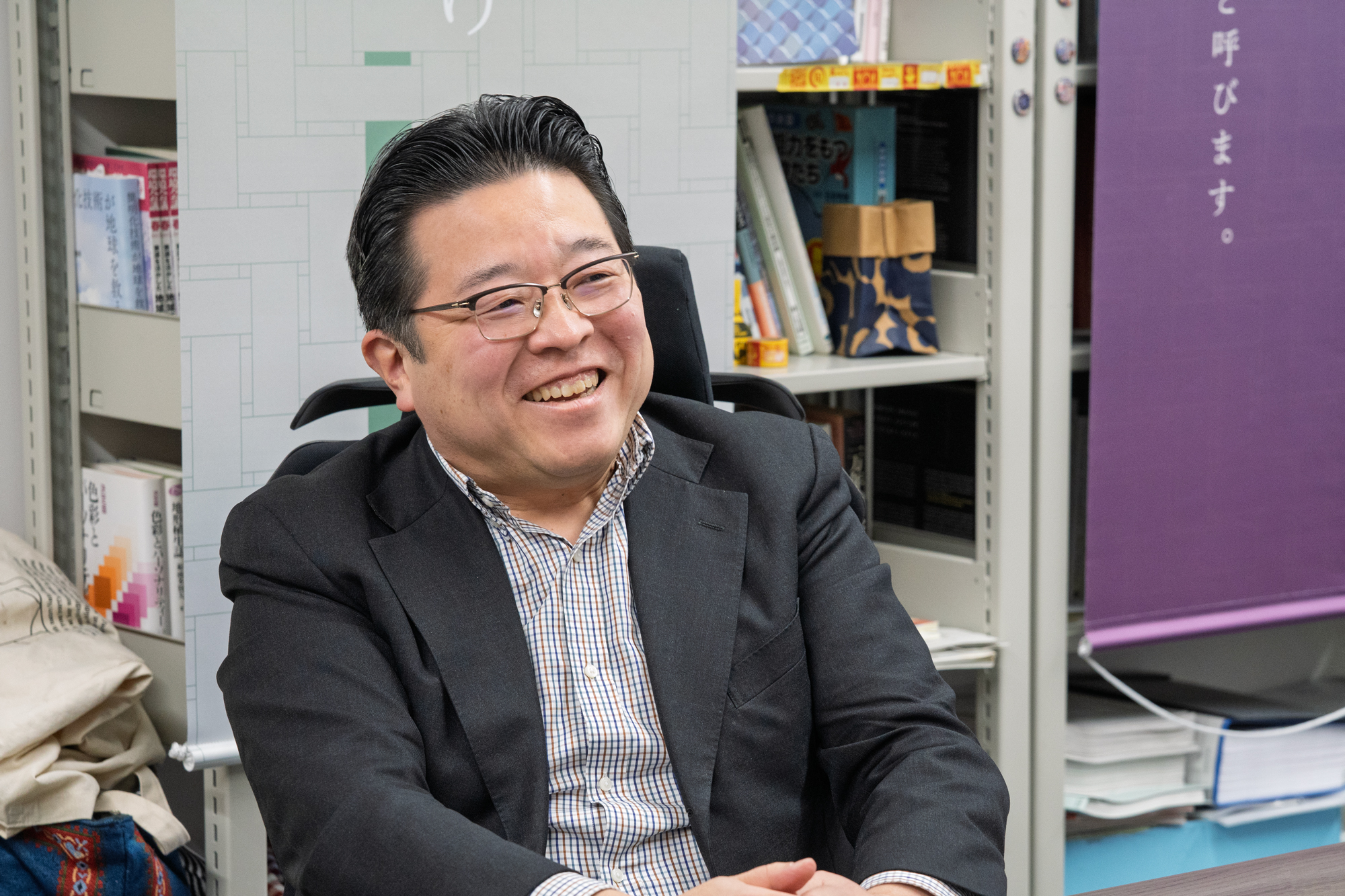
What perspectives should those of us living in this era hold dear? We asked him that final question. “I think everyday life in Japan has a kind of beauty to it. We’re so used to it that we tend not to notice, but I’d love for people to see it again with fresh eyes. It’s something I believe Japan can be truly proud of on the world stage. I hope people will take another look at the ordinary.”
The lifestyle the future calls for may not be something entirely new that must be built from scratch — it may be a matter of noticing the value already present in our daily lives and consciously choosing it for ourselves. Professor Furukawa’s varied research is not simply an effort to preserve past wisdom as a historical record, but to present it as a set of choices for shaping the future. Lifestyles are not given to us — they are chosen through awareness. A sustainable society does not lie in some distant ideal; it is already beginning, in the way each of us chooses to look at everyday life.
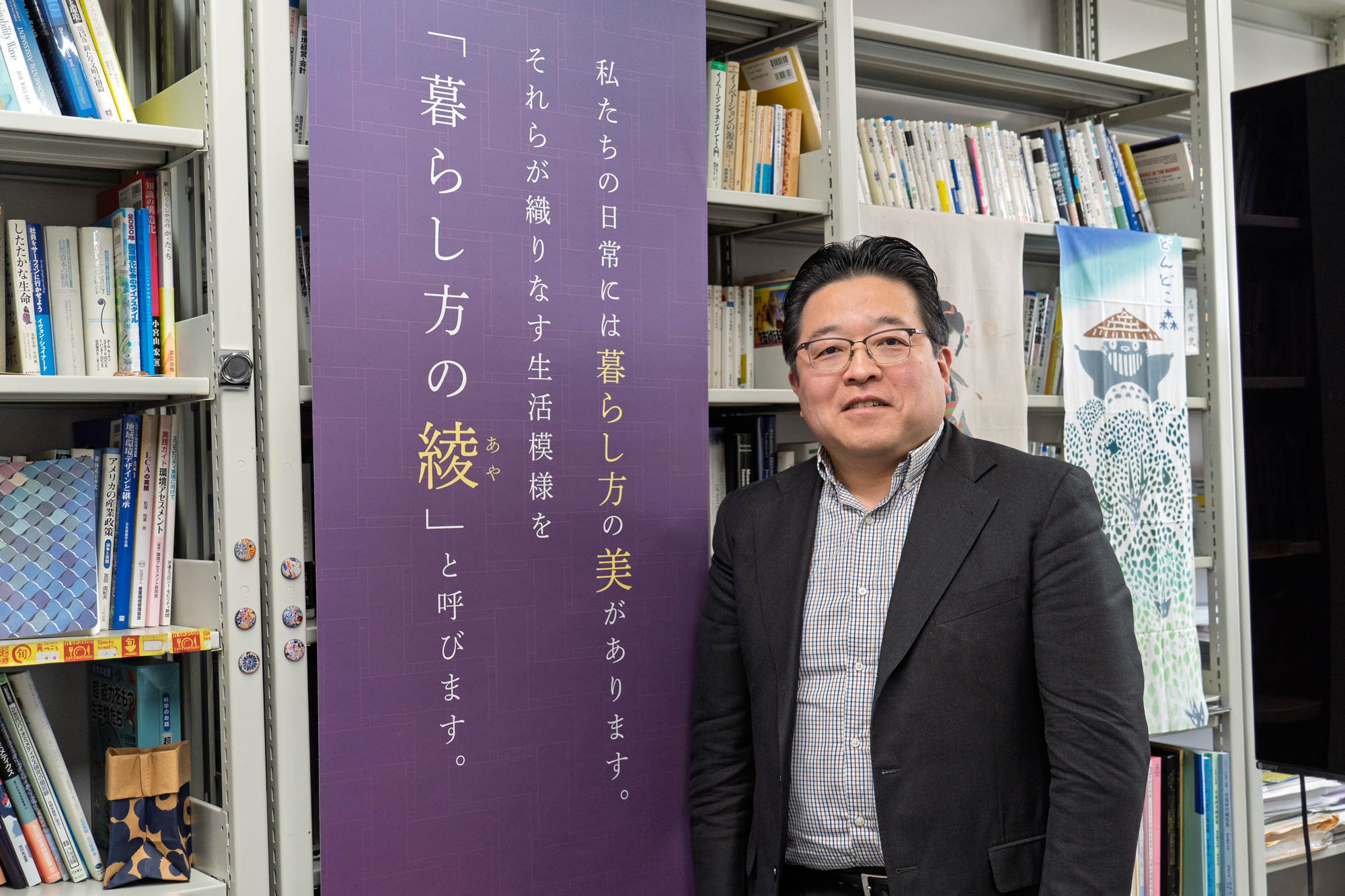
Professor, Department of Environmental Management and Sustainability, Faculty of Environmental Studies / Graduate School of Environmental and Information Studies, Tokyo City University. Director, Sustainability Science Collaborative Research Center, Advanced Research Laboratories. Completed the doctoral program at the Department of Advanced Interdisciplinary Studies, Graduate School of Engineering, The University of Tokyo in 2005; Ph.D. (Engineering). After working at a private think tank and as an Associate Professor at the Graduate School of Environmental Studies, Tohoku University, he has been in his current position since 2018.