Architecture / Civil Engineering
Turning human wisdom into data to build the future of construction
Advanced Research Laboratories Specially-apointed professorYABUKI Nobuyoshi

Geotechnical Centrifuge at Tokyo City University’s Setagaya Campus
All English text on this page has been translated automatically. Some sentences may be unnatural.
A site with a commanding view from the top of a hill, a retaining wall built along the edge of a cliff, a road carved into a mountainside. Our lives are built on land that has been reshaped by human hands. Unlike artificial materials such as steel and concrete, however, soil can vary greatly in its properties depending on its location and condition. Even slopes that look alike can differ in strength depending on their geology and water content, and it is impossible to tell from the outside how much they can withstand or where they might fail. Nor can we simply destroy an actual slope or retaining wall to find out. This is where centrifuge model testing comes into play: a method that uses small-scale models to reproduce the behavior of real ground and structures. Professor Kazuya Itoh of the Faculty of Architecture and Urban Design is using this technique to study ways of protecting lives from slope failures and damage to retaining walls.
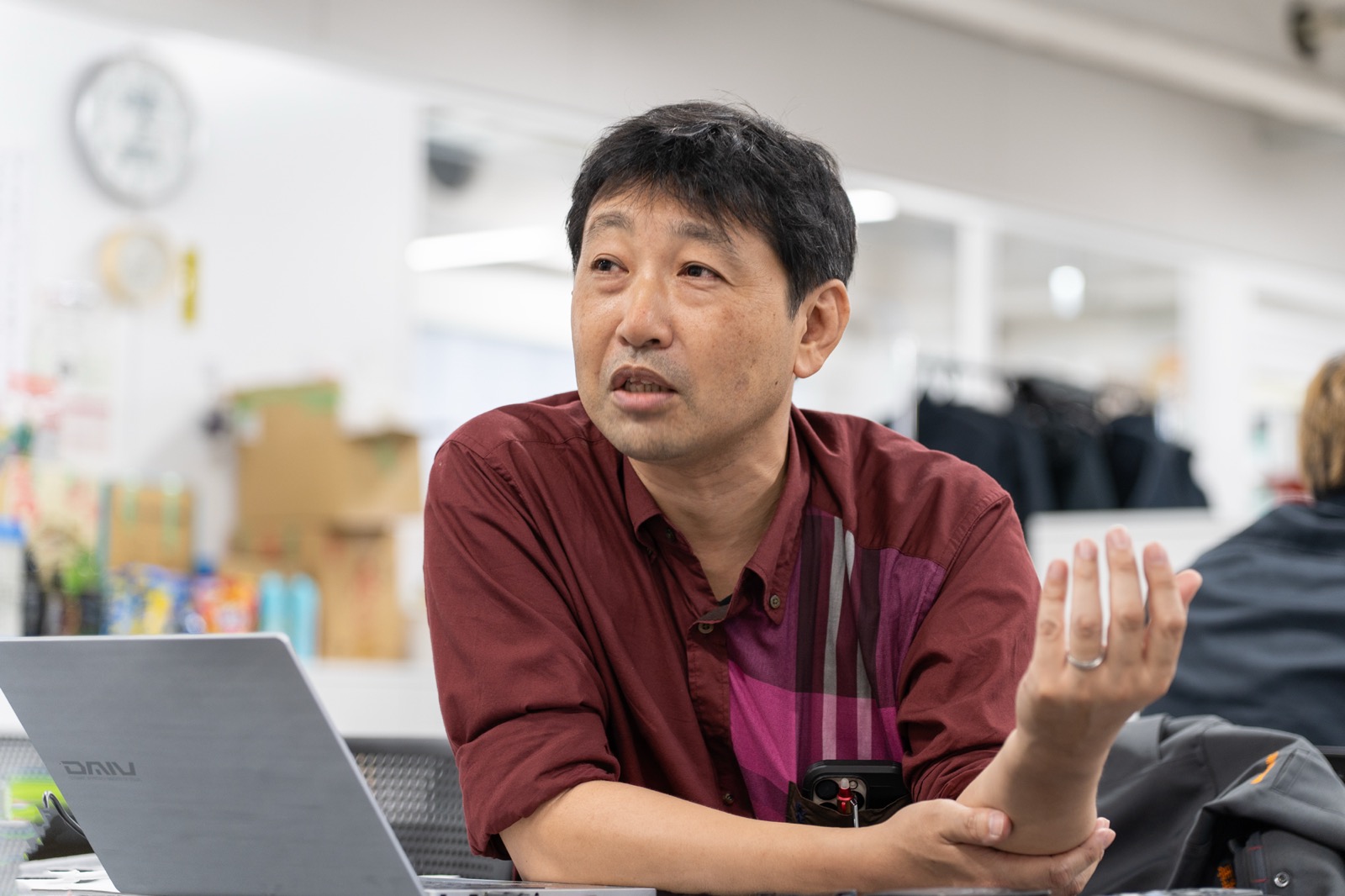
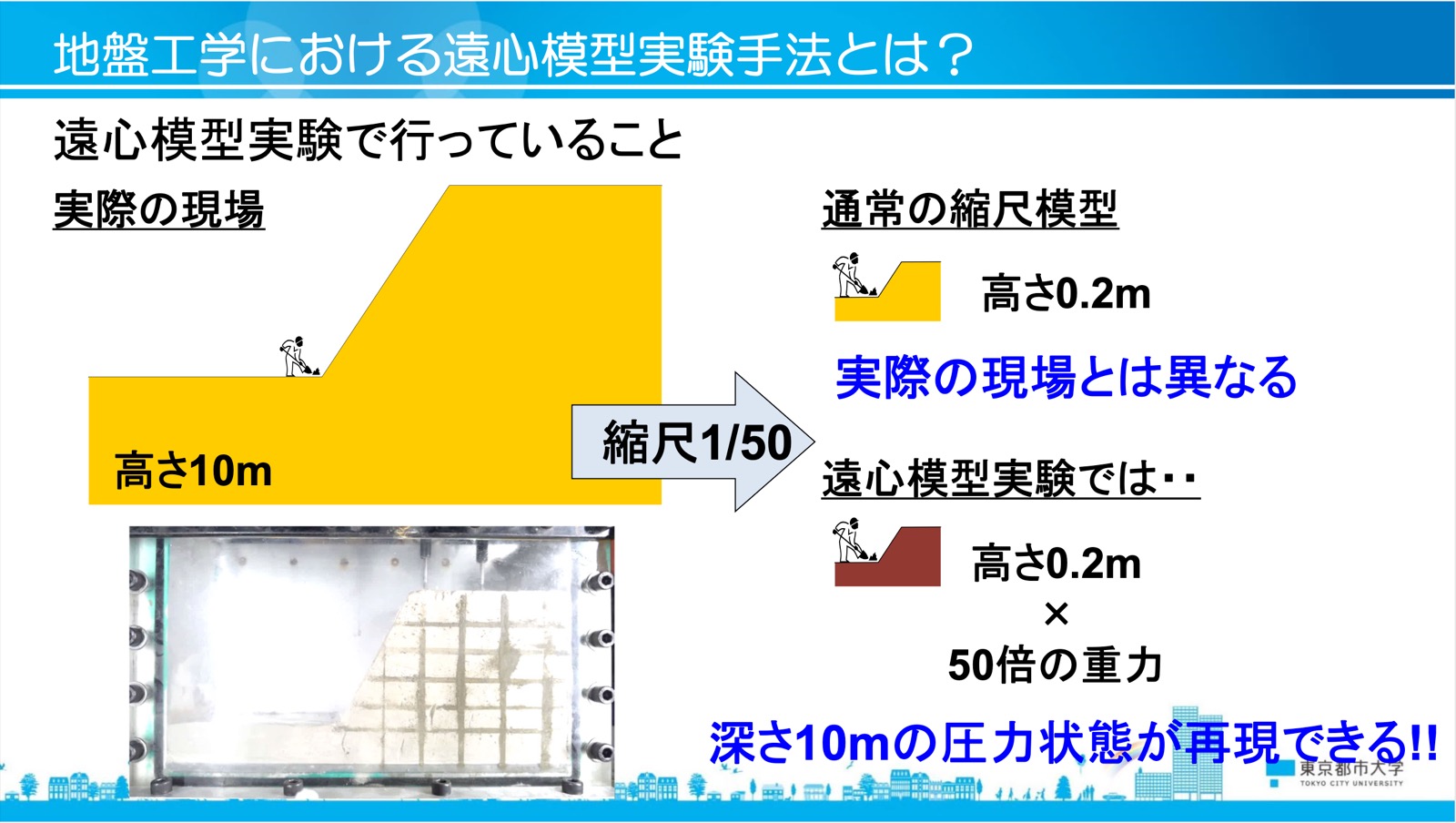
Professor Itoh specializes in centrifuge model testing, an experimental method in which a scaled-down model is subjected to high centrifugal acceleration to reproduce stress conditions equivalent to those in a full-scale structure. For example, if a 10-meter slope is reduced to 1/50 scale, the model is only about 20 centimeters high. By applying centrifugal acceleration equivalent to 50 times normal gravity, researchers can recreate stress conditions similar to those in the actual slope. “We apply high gravity to a small model so that it behaves like the real thing. And because it is a model, it is all right if we destroy it. We can see how it fails and investigate what we can do to prevent that failure. I think that is what makes this kind of experiment so fascinating.”
Centrifuge model testing can reveal more than just the moment of failure. By testing a variety of conditions, researchers can observe where deformation begins, which parts become weak points, and how the process ultimately develops into failure. It can also reproduce, in a much shorter period of time, phenomena that would take years or even decades in the real world, such as consolidation settlement, in which the ground gradually sinks over time under the weight of buildings and other structures. For this reason, centrifuge testing facilities are sometimes referred to overseas as “time machines.” In a sense, they bring slow changes taking place underground into a timescale that humans can observe.
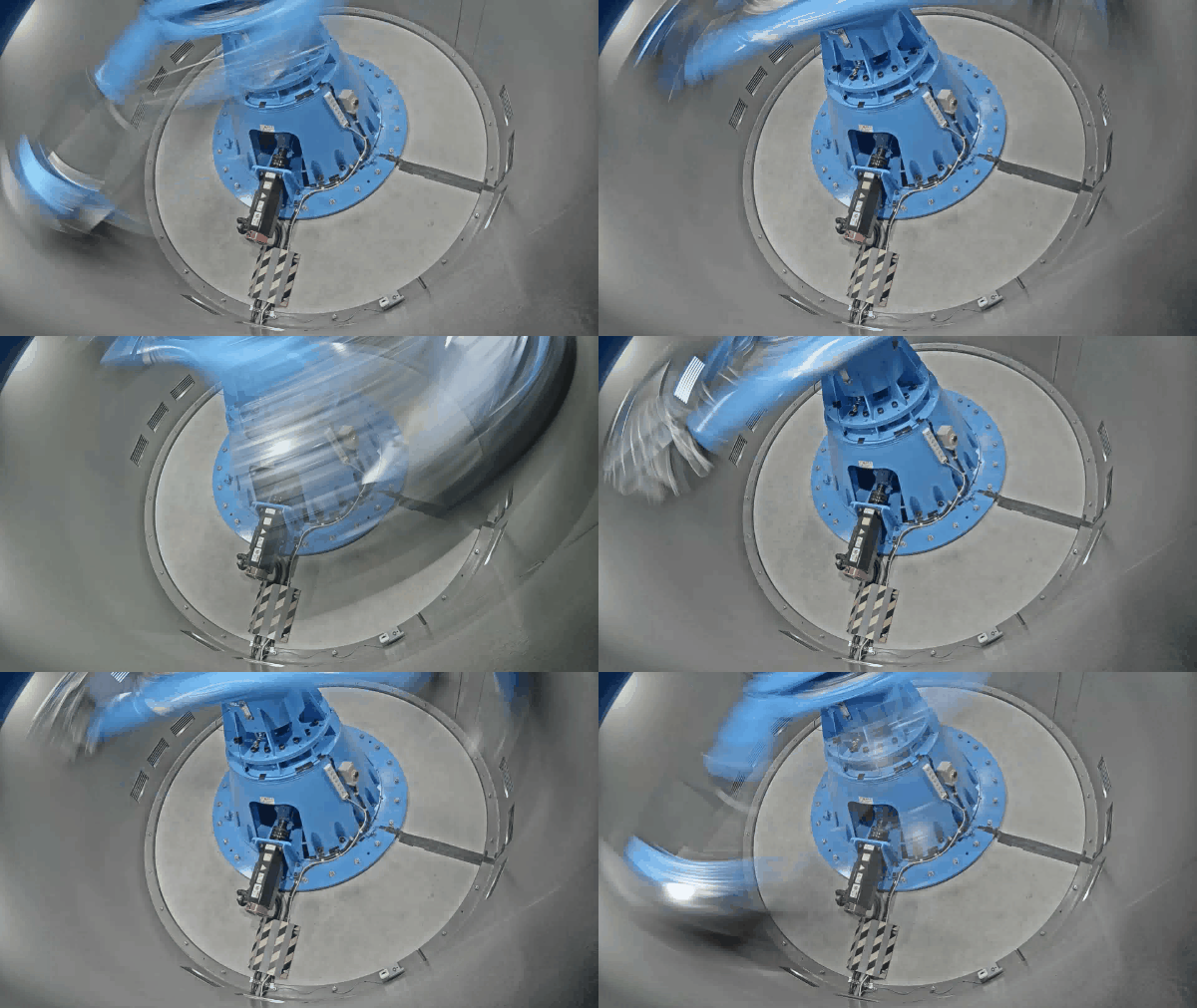
Tokyo City University introduced its first geotechnical centrifuge in 1995. Professor Itoh began working with the equipment as an undergraduate student and has continued to use centrifuge model testing as a research tool even as the scope of his research has expanded. The laboratory now uses its third-generation centrifuge. It provides a larger space for models and can be combined with equipment such as a shaking table to reproduce earthquakes, a rainfall simulation system, and cameras for observing the interior of models, enabling more detailed examination of slope failures and deformation of retaining walls. Inside the centrifuge while it is rotating, even ordinary cameras may fail to operate properly. The newest equipment is not necessarily the best solution. Each device must be tested individually to determine whether it can operate reliably under intense centrifugal forces and then adapted into a form suitable for research.
Behind Professor Itoh’s research lies his experience confronting the realities of occupational accidents. After earning his doctorate, he worked at the National Institute of Occupational Safety and Health, Japan, a research institute under the jurisdiction of the Ministry of Health, Labour and Welfare, where he conducted investigations and research aimed at preventing occupational accidents at construction sites. He visited sites where a slope had collapsed during the construction of a retaining wall and buried workers, where the wall of a trench excavated for an archaeological survey had collapsed, and where soil saturated with snowmelt had flowed into a road construction site. His job was to enter the site after an accident, investigate the condition of the soil and the construction process, and determine why the incident had resulted in fatalities. The number of such accidents has declined as legislation and preventive technologies have improved. But it has not fallen to zero. Professor Itoh sees one of the roles of research as “creating the evidence needed to change laws.” Laws are meant to be followed, but if they do not reflect actual conditions in the field and cannot protect people, they need to be changed. What is required at such times is reliable data showing why a situation is dangerous, under what conditions accidents occur, and which countermeasures are effective. Centrifuge model testing is an important means of producing that evidence.
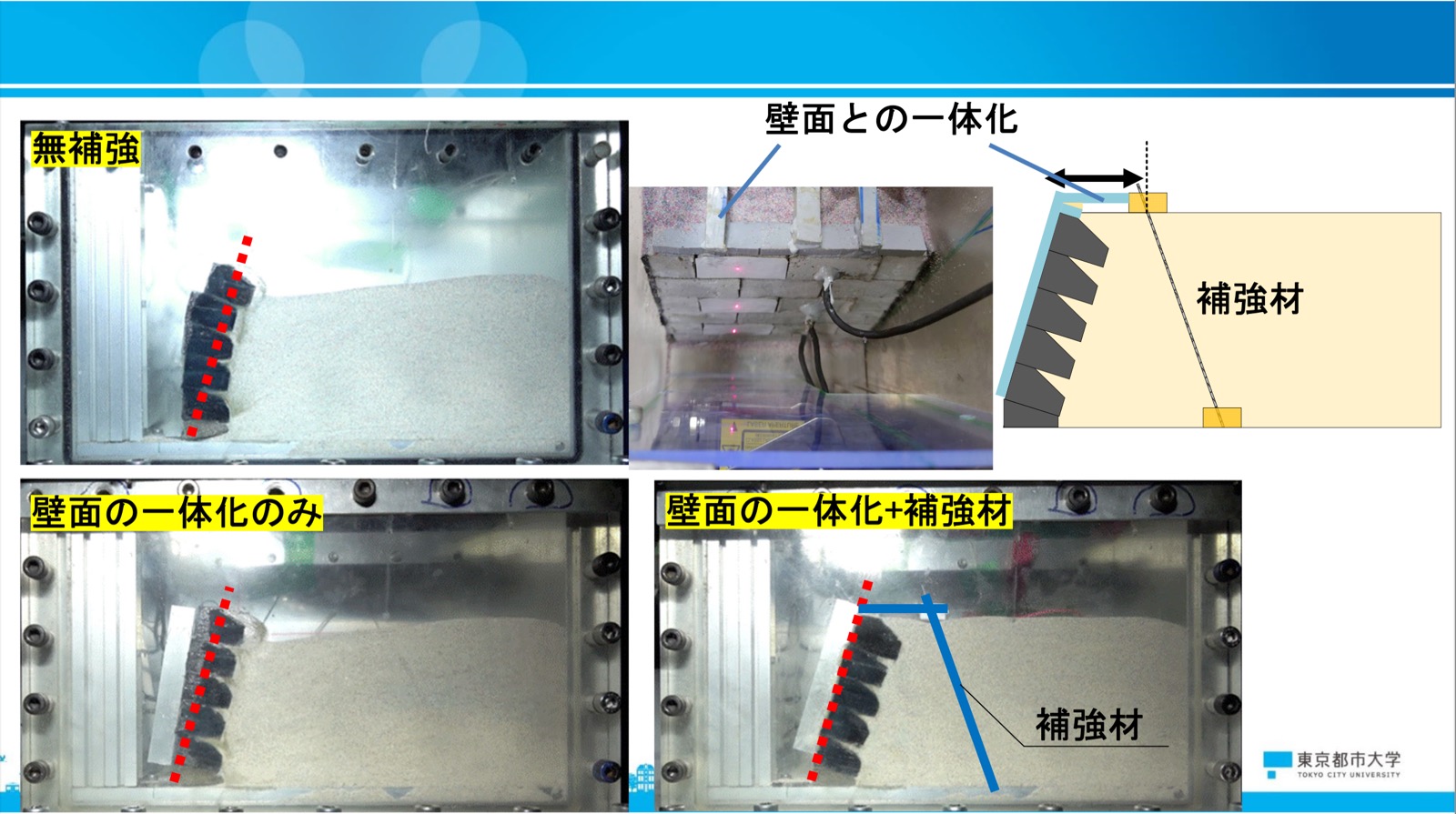
One area Professor Itoh has been working on in recent years is the reinforcement of aging stone masonry retaining walls in residential areas. Since the period of rapid economic growth, residential development in Japan has expanded onto sloping land and areas near the outlets of valleys. Some older retaining walls do not provide the level of safety required by today’s standards. If they collapse during a major earthquake or heavy rainfall, they can damage not only homes but also block roads, hindering rescue and recovery operations. The 2016 Kumamoto Earthquake and the 2024 Noto Peninsula Earthquake caused numerous retaining walls in residential areas to collapse or deform, once again highlighting concerns about the safety of residential land, including retaining walls and slopes. Countermeasures can be expensive, and conventional methods often cost more than residents can reasonably afford to pay themselves. In areas where houses are arranged in terraces along a slope, it may also be difficult to carry out construction work from the front of a retaining wall. Professor Itoh and his colleagues therefore set out to develop a less expensive reinforcement method that could be installed from above the retaining wall. By inserting reinforcement members using a new technique and integrating them with the existing wall, the method can prevent the retaining wall from overturning forward during an earthquake. In centrifuge model tests, an untreated retaining wall and a reinforced wall were placed side by side and subjected to progressively stronger shaking to compare their deformation. While the untreated wall was gradually pushed forward, the reinforced wall was able to withstand the shaking. Working with a partner company, the researchers developed the technique into a practical construction method, which was eventually adopted in the rebuilding of an elementary school in Tokyo. “Japan is fundamentally a country with geologically vulnerable ground. There may be places that are relatively safer than others, but wherever you live, you need to pay attention to the ground and to retaining walls. Ideally, residents should be able to afford these countermeasures themselves. We still have a long way to go, but I hope we can move even a little closer to that goal.”
The laboratory conducts many collaborative research projects with companies and research institutions, and the centrifuge is used in most of them. University rules require faculty and staff members to operate the equipment, and preparing for an experiment takes a considerable amount of time. Even so, research that addresses problems actually occurring in the field makes it easier for students to appreciate the significance of their work. How can we protect a structure that might fail? Is a new construction method genuinely effective? By confronting questions directly connected to real-world practice, students learn how to collect data, construct models, and interpret experimental results. Few universities have geotechnical centrifuges, and only two universities in Tokyo, including Tokyo City University, have such equipment. Moreover, operating a centrifuge effectively requires specialized expertise. Researchers must build the model, install measuring instruments, establish the appropriate experimental conditions, and interpret the phenomena from the resulting images and numerical data. Professor Itoh himself developed centrifuge model testing into one of his core research tools by assisting with a wide variety of studies and encountering many different research themes since his student days. “Students are highly motivated because they can clearly see that their research is intended to solve problems that are actually occurring in the real world.”
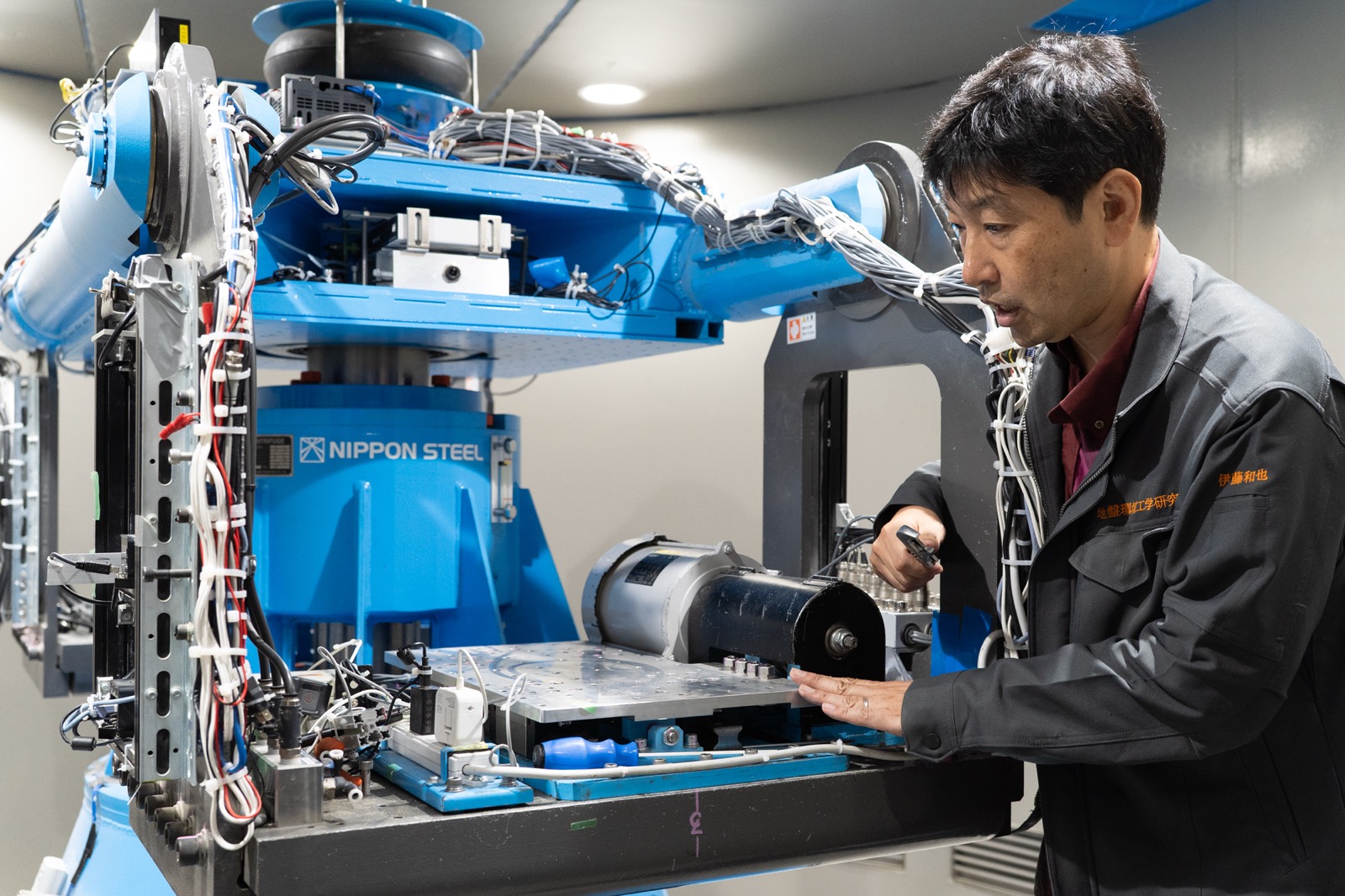
Looking ahead, Professor Itoh is placing particular emphasis on research into compound disasters involving both water and the ground. As localized torrential rainfall becomes more frequent, it is increasingly necessary to consider situations in which earthquakes, heavy rainfall, flooding, and ground damage occur in combination. Although flooding itself is not his primary specialty, his experience in disaster investigations has convinced him of the need to consider the relationship between water flow and changes in the ground. He is also focusing on research into pile foundations that support buildings. Because pile foundations support structures underground, where they cannot be seen, problems are difficult to address once they occur. It is therefore essential to evaluate their performance in advance and establish systems that can support design and certification. “I think research that effectively links water and the ground is important. I would also like to establish a system that allows us to properly evaluate pile foundations.”
What Professor Itoh hopes to convey to younger generations is the importance of building a solid foundation of knowledge. In science and engineering, he says, learning is not about immediately pursuing whatever appears new or novel. If students use specialized tools without mastering the fundamentals of mathematics and physics, they will not be able to explain in their own words why a particular result was obtained. Now that AI and advanced simulation tools have become readily accessible, it is more important than ever to ask, “Why does this happen?” and to verify the answer through hands-on work. Professor Itoh has enjoyed making things since childhood and says that he often ended up breaking the things he built. That experience, too, connects to his current research into how things fail. “You need to build up the fundamentals properly. If you have the curiosity to ask why something happens or why something breaks, I think research becomes much more enjoyable.”
The ground quietly supports our daily lives. Beneath us are geological strata accumulated over immense periods of time, recording the history of a land that has been compressed, folded, and eroded. Reproducing in a small model the properties of soil that cannot be understood from appearance alone, and carefully observing the process by which it fails, is also a process of accumulating data piece by piece to better understand Japan’s complex ground conditions. By transforming invisible changes occurring underground into phenomena that can be observed directly before our eyes, Professor Itoh’s research is helping to make the land on which we live safer and more resilient.
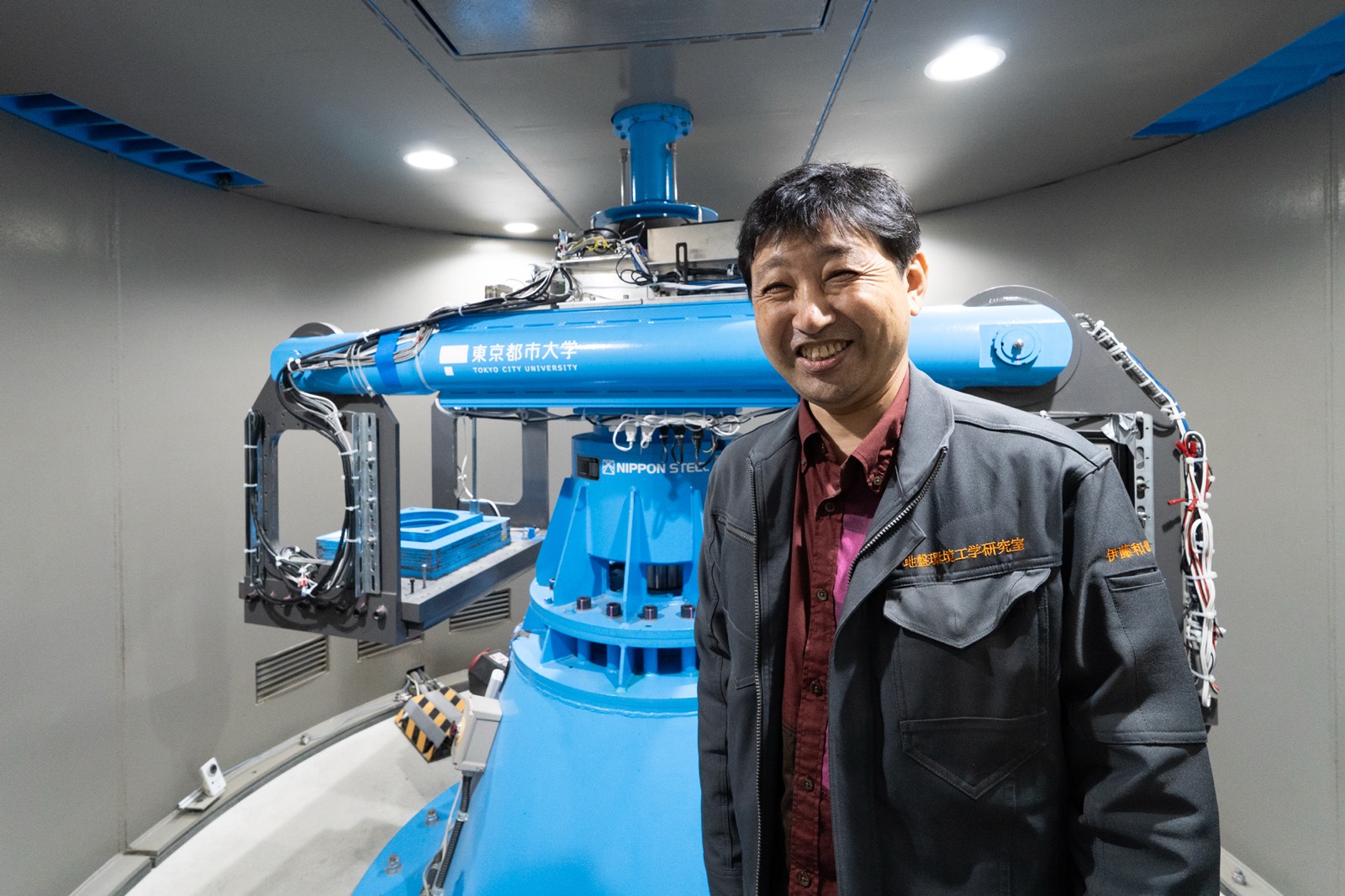
Professor and Chair, Department of Urban and Civil Engineering, Faculty of Architecture and Urban Design. Deputy Director, Advanced Research Laboratories, and Director, Research Center for Management of Infrastructure and Natural Disaster Control. He received his Ph.D. in Engineering from the Department of Civil Engineering, Graduate School of Science and Engineering, Tokyo Institute of Technology, in 2003. After working at the National Institute of Occupational Safety and Health, Japan, he joined Tokyo City University as an Associate Professor in 2015. He was promoted to Professor in 2020 and assumed his current positions in 2025.