Basic Research
Exploring the Invisible Universe Through the Power of Infrared
Advanced Research Laboratories Specially-appointed ProfessorNAKAGAWA Takao

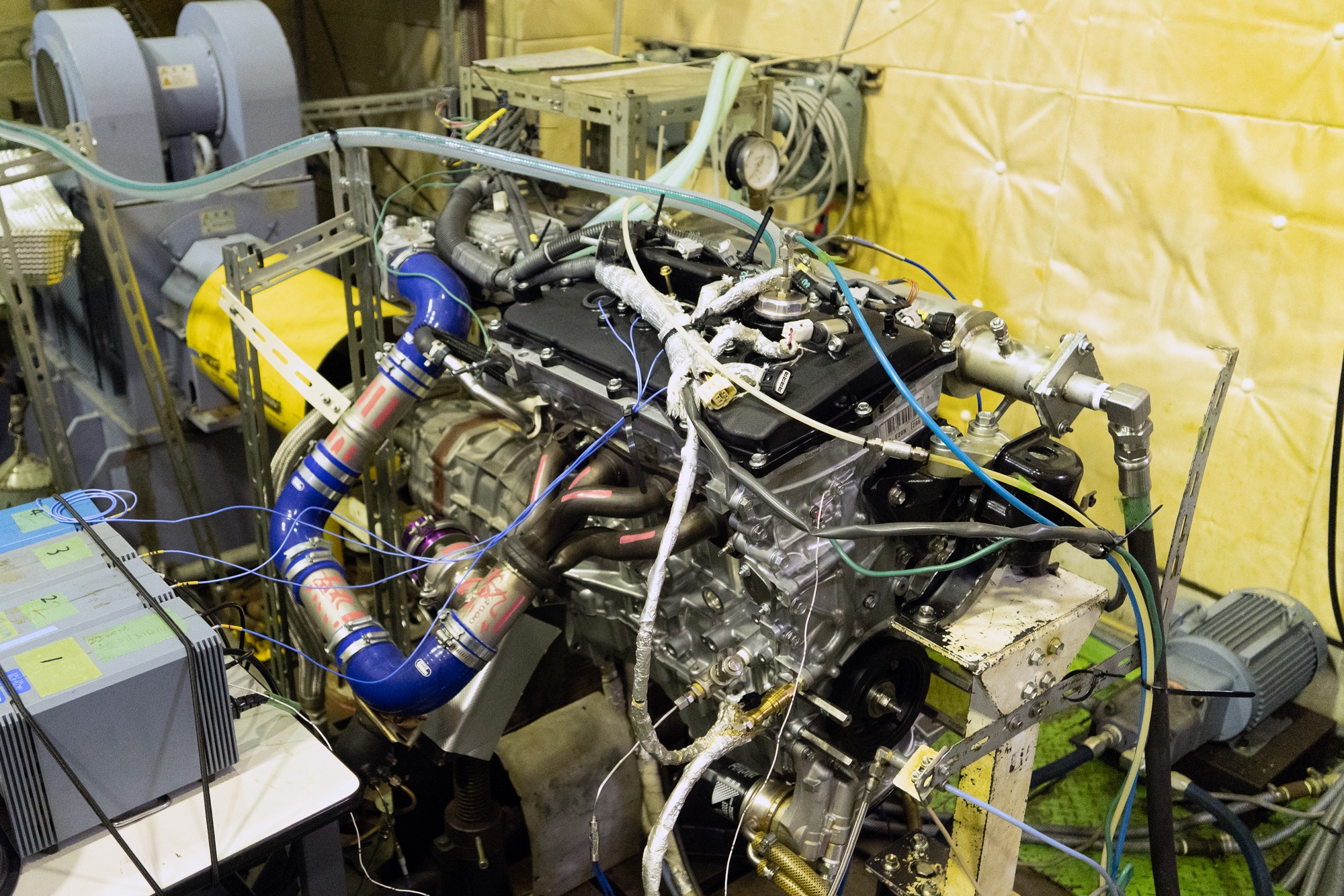
A Single-Cylinder Engine Used in Experiments
All English text on this page has been translated automatically. Some sentences may be unnatural.
Walking through the city, one cannot help but notice the growing number of cars that make no engine noise. Around the world, the adoption of electric vehicles and renewable energy is accelerating as societies work toward carbon neutrality. Yet not every machine that supports modern life can be electrified immediately. Internal combustion engines continue to play an essential role in generators, construction equipment, forklifts, ships, industrial machinery, and other applications that require sustained, high-power operation. By changing the fuels they use, improving their efficiency, and ensuring their reliability, engines can continue to support society in the carbon-neutral era. Professor Yuji Mihara of the Faculty of Science and Engineering is exploring this potential with a clear focus on the development of engines for real-world use.
Tokyo City University has a long history of hydrogen engine research. Its work in this field began in the 1970s and has continued for more than half a century. The university has a dedicated hydrogen laboratory designed for hydrogen engine research. Should hydrogen leak, the building is structured so that the lightweight gas can escape through its upper section. “This university also has the infrastructure required to handle high-pressure hydrogen. I believe this is an exceptionally distinctive research environment for a university of this scale.”
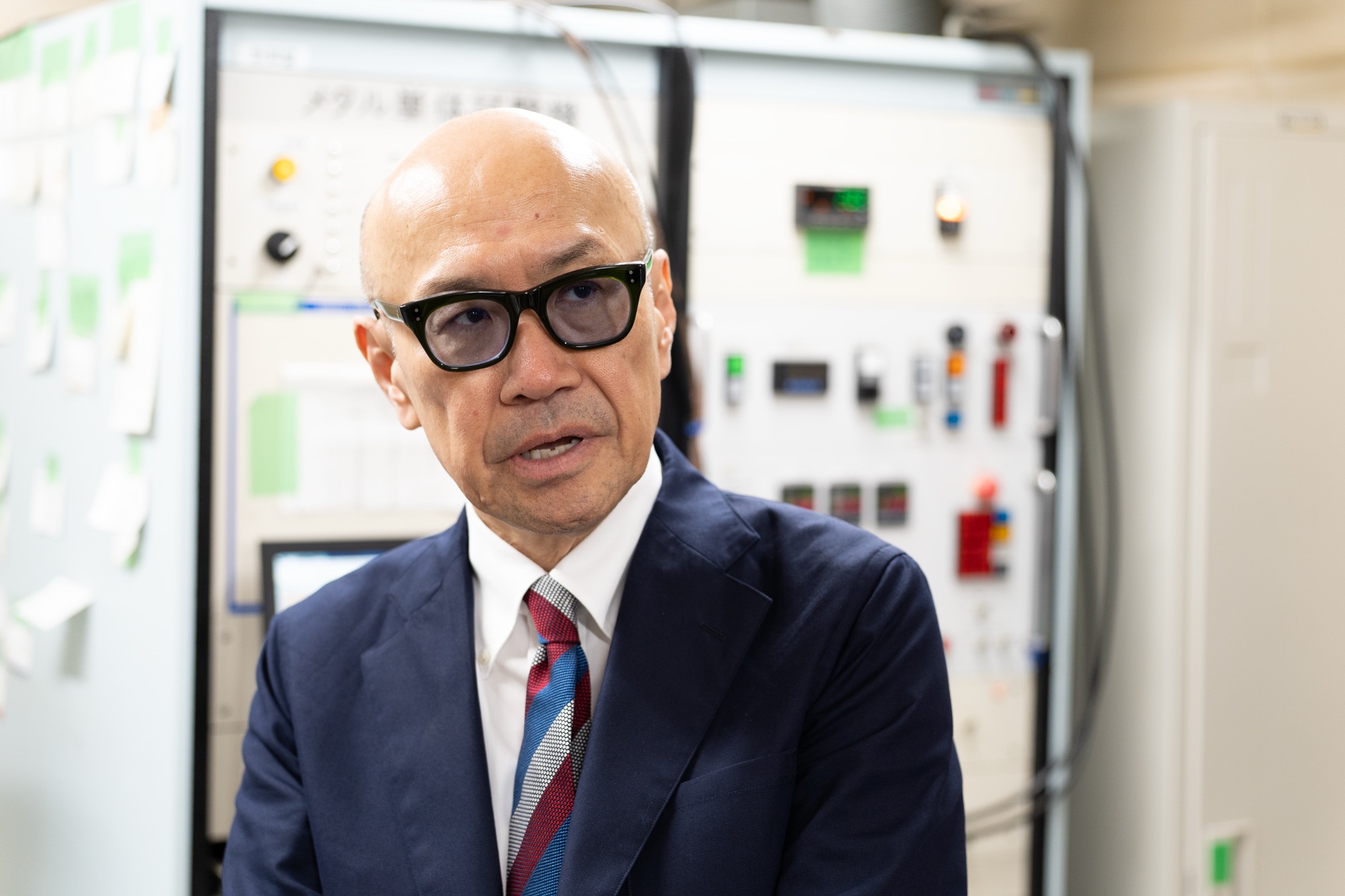
One of the major advantages of hydrogen engines is that they emit no carbon dioxide during combustion. Fossil fuels such as gasoline and diesel contain carbon, so burning them produces carbon dioxide, carbon monoxide, hydrocarbons, and other emissions. Hydrogen, by contrast, contains no carbon, meaning that its combustion essentially produces water. Hydrogen engines nevertheless present their own challenges. Nitrogen oxides, which contribute to air pollution, can be generated through reactions with nitrogen in the air. The large amount of water produced during combustion can also affect lubricants such as engine oil, as well as metal components. Professor Mihara therefore places particular emphasis on identifying the challenges that cannot be avoided in practical applications, examining them from the perspectives of combustion, lubrication, materials, and measurement.
The laboratory conducts detailed investigations into how flames propagate when hydrogen is supplied to the combustion chamber. Hydrogen engines generally use one of two combustion methods: mixing hydrogen with air in the intake port before sending it into the combustion chamber, or injecting hydrogen directly into the combustion chamber. The former is relatively easy to introduce when modifying an existing engine. In terms of controlling power output and exhaust emissions, however, the latter method—direct injection—offers significant advantages. Tokyo City University has focused its research on direct injection for many years. Using lasers, mirrors, and high-speed cameras, researchers observe the interior of the combustion chamber from below and control flame propagation so that the flame does not approach the cooler chamber walls too closely. Their aim is to achieve combustion that increases thermal efficiency while reducing nitrogen oxide emissions.
A defining feature of Professor Mihara’s research is that it does not treat combustion as an isolated subject. Instead, it takes an integrated approach to all the issues that must be resolved for an engine to function in practical use. Water vapor contained in high-temperature combustion gases can condense into liquid water when it comes into contact with the cooler walls of an engine, potentially contaminating the lubricant. The effects of this moisture cannot be ignored, particularly immediately after the engine starts, when its components remain at relatively low temperatures. “People sometimes said that even if water entered the lubricant, it would simply evaporate once the engine warmed up, so it would not present a problem. Our experiments showed, however, that once a lubricant has been affected by water, it does not completely return to its original condition.”
The research also examines the additives contained in lubricants. Conventional lubricants use additives containing substances such as calcium and magnesium to reduce friction and wear. These additives normally form a thin reaction film on metal surfaces, limiting direct contact between components and reducing friction. In lubricants affected by moisture, however, this film may no longer form properly. Professor Mihara and his colleagues have found that certain additive components may interact with water and prevent the lubricant’s friction characteristics from recovering. This discovery is expected to contribute to the development of new lubricants suited to hydrogen engines.
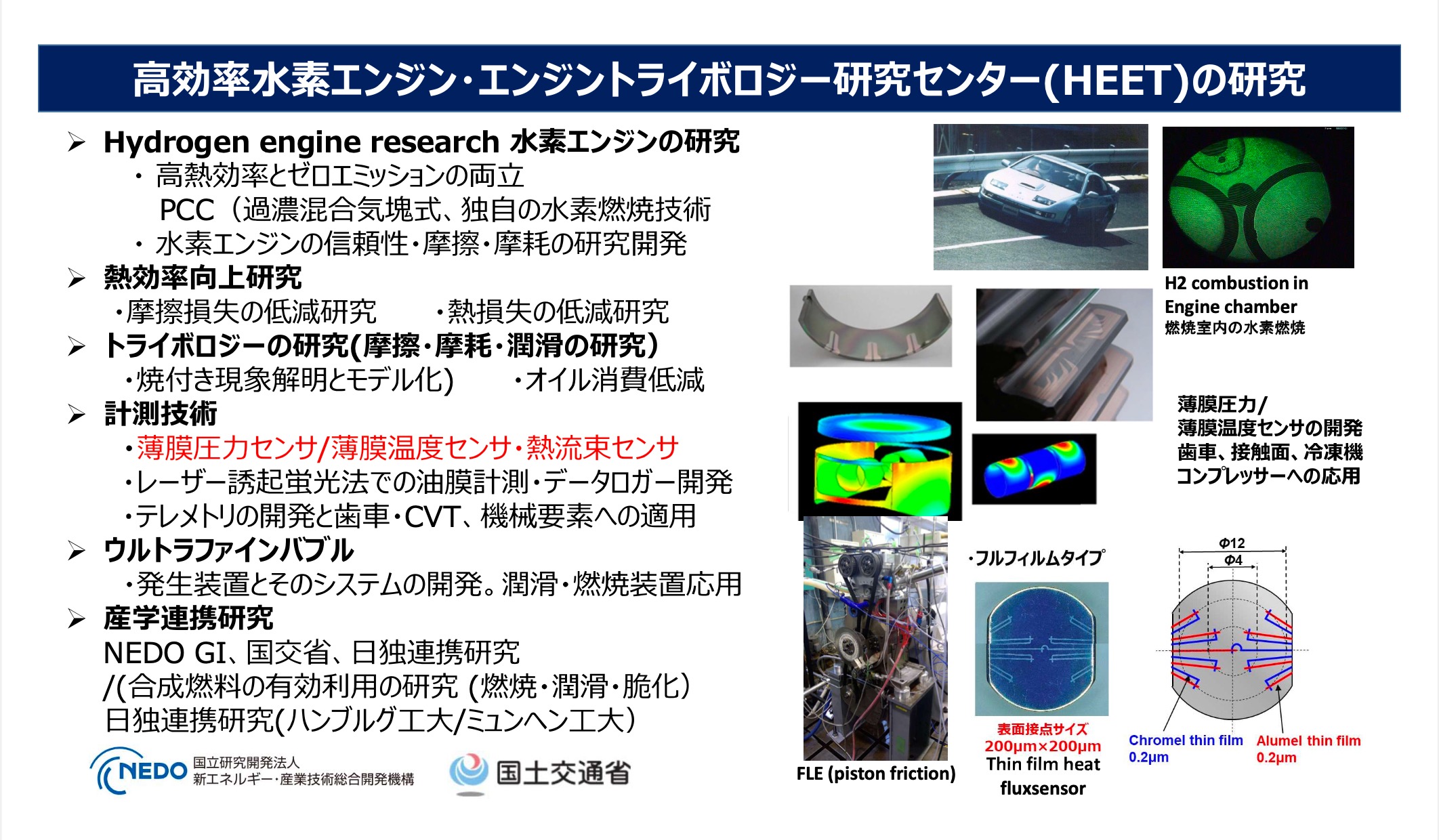
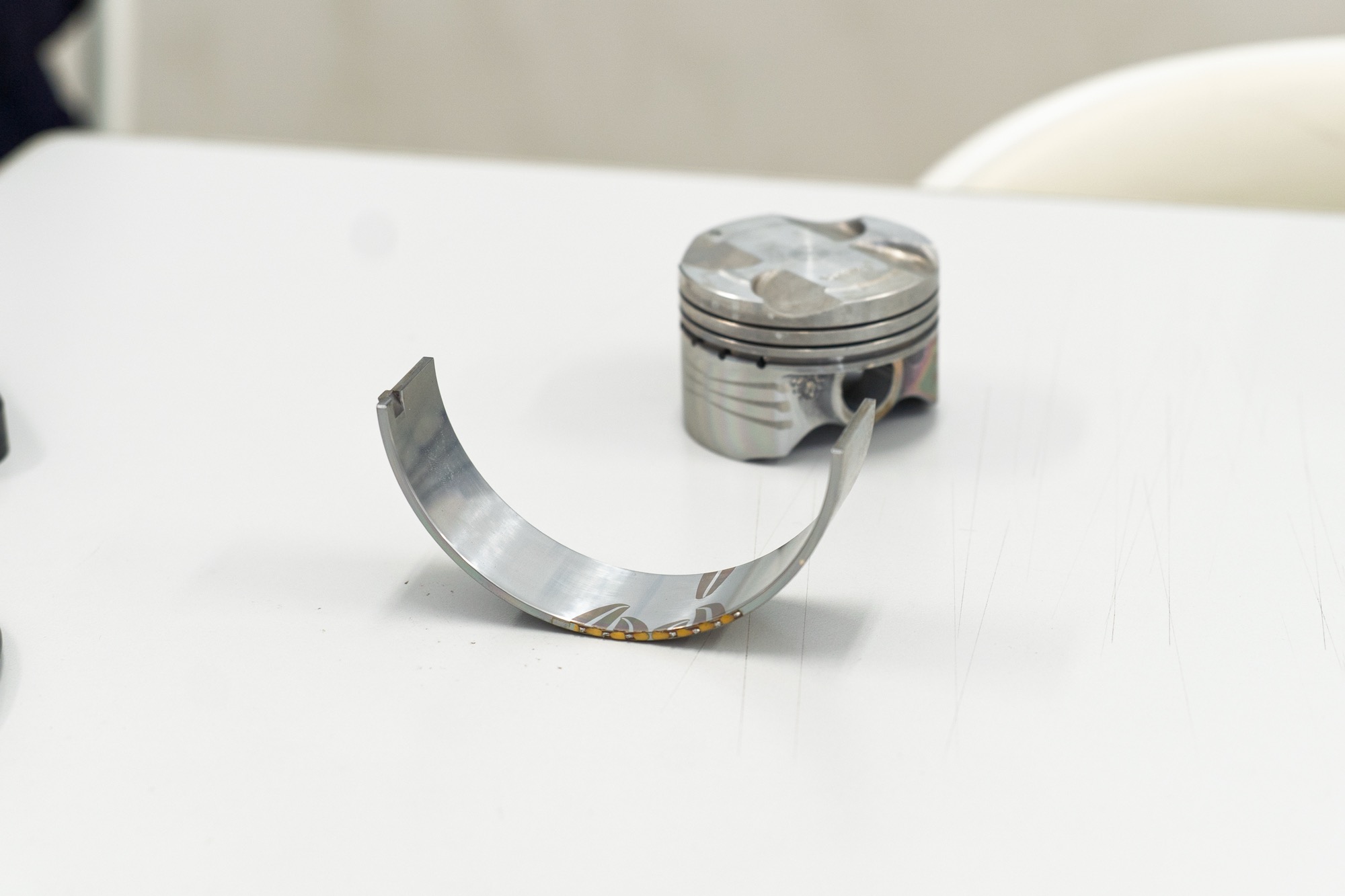
Another major area of research is measurement technology for observing phenomena inside engines. When a combustion method or fuel supply system is changed, simply establishing that fuel economy has improved does not provide enough information for the next stage of development. Researchers need to understand why the improvement occurred, where heat was lost, and what forces acted on each component. Professor Mihara has therefore developed and applied thin-film sensors that measure parameters such as temperature and pressure. These sensors, only a few micrometers thick, are incorporated directly into the surfaces of actual components such as pistons and gears, enabling researchers to capture conditions inside an operating engine.
This thin-film sensor technology is expected to find applications not only in engines, but also in gears, transmissions, hydrogen-powered motorcycles, and the aviation sector. Because the signals involved are extremely weak, measurement systems capable of minimizing noise are essential. Professor Mihara’s laboratory develops not only the sensors themselves, but also the amplifiers used to extract signals, the systems that supply electrical power, and the equipment needed to collect data from rotating components. Because the researchers understand the sensors, the measurement equipment, and the engine as an integrated system, they are able to assess whether the data obtained are valid. “When I was a graduate student, people told me that my idea of applying thin films to engine components was completely unrealistic. But if something cannot be measured, we have to devise a way to measure it. There was no alternative but to try.”
One field to which Professor Mihara has recently devoted particular attention is the application of ultrafine bubbles to internal combustion engines. Ultrafine bubbles are extremely small bubbles that are increasingly being used in a wide range of fields, including showers, cleaning, agriculture, and machining. Professor Mihara is applying these microscopic bubbles to lubricants and fuels, investigating whether they can reduce friction losses and improve fuel economy and exhaust-emission performance.
Traditionally, bubbles in engine oil have been regarded as something that should be removed, as their presence was thought to impair lubrication and potentially damage the engine. Professor Mihara, however, began with the counterintuitive idea of deliberately introducing bubbles and demonstrated that they may reduce friction losses. “Many people asked why we would deliberately put bubbles into the oil. But when we tried it, the friction decreased. Only when the results appear do people begin to accept the idea. That is one of the real pleasures of research.”
Professor Mihara is also studying aqueous sugar-alcohol solutions as environmentally compatible lubricants. Sugar alcohols such as xylitol and sorbitol are familiar substances that are also used in food. The research began with a fundamental question: even if a hydrogen engine does not use fossil fuel, should its lubricant still be derived from crude oil? Research into environmentally responsible alternatives to mineral oils is also accelerating in Europe. Professor Mihara and his colleagues are applying aqueous sugar-alcohol solutions to gear units and other machinery, and their results increasingly suggest that these solutions may achieve lower losses than mineral oils. A substance considered largely harmless even when ingested could potentially serve as a lubricant that supports mechanical systems. This points to possibilities for new mechanical technologies that extend beyond decarbonization alone.
Professor Mihara’s decision to enter his current field of research can be traced back to a brochure he saw in high school for Musashi Institute of Technology, the predecessor of Tokyo City University. He was deeply impressed to learn that the university had developed and actually operated a hydrogen-powered vehicle. It was not simply a matter of running an engine on hydrogen, but of making an entire car move with hydrogen. Attracted by that vision, he decided to study at Musashi Institute of Technology.
The attitude of his predecessors—taking on what appeared impossible, even building their own liquid-hydrogen tanks to make a vehicle run—continues to shape his research today. In conventional basic research, researchers often begin by rubbing test pieces together and then attempt to apply the resulting findings to actual machinery. Professor Mihara’s laboratory takes the opposite approach. It begins with actual machinery, isolates the problems found there, and then translates them into fundamental tests and analyses. “We love engines, so we begin with engine research. We identify specific problems in actual machinery and then consider how to reduce them to fundamental phenomena that can be investigated. That approach is what makes this laboratory distinctive. I am also confident that we are leading the field in this area.”
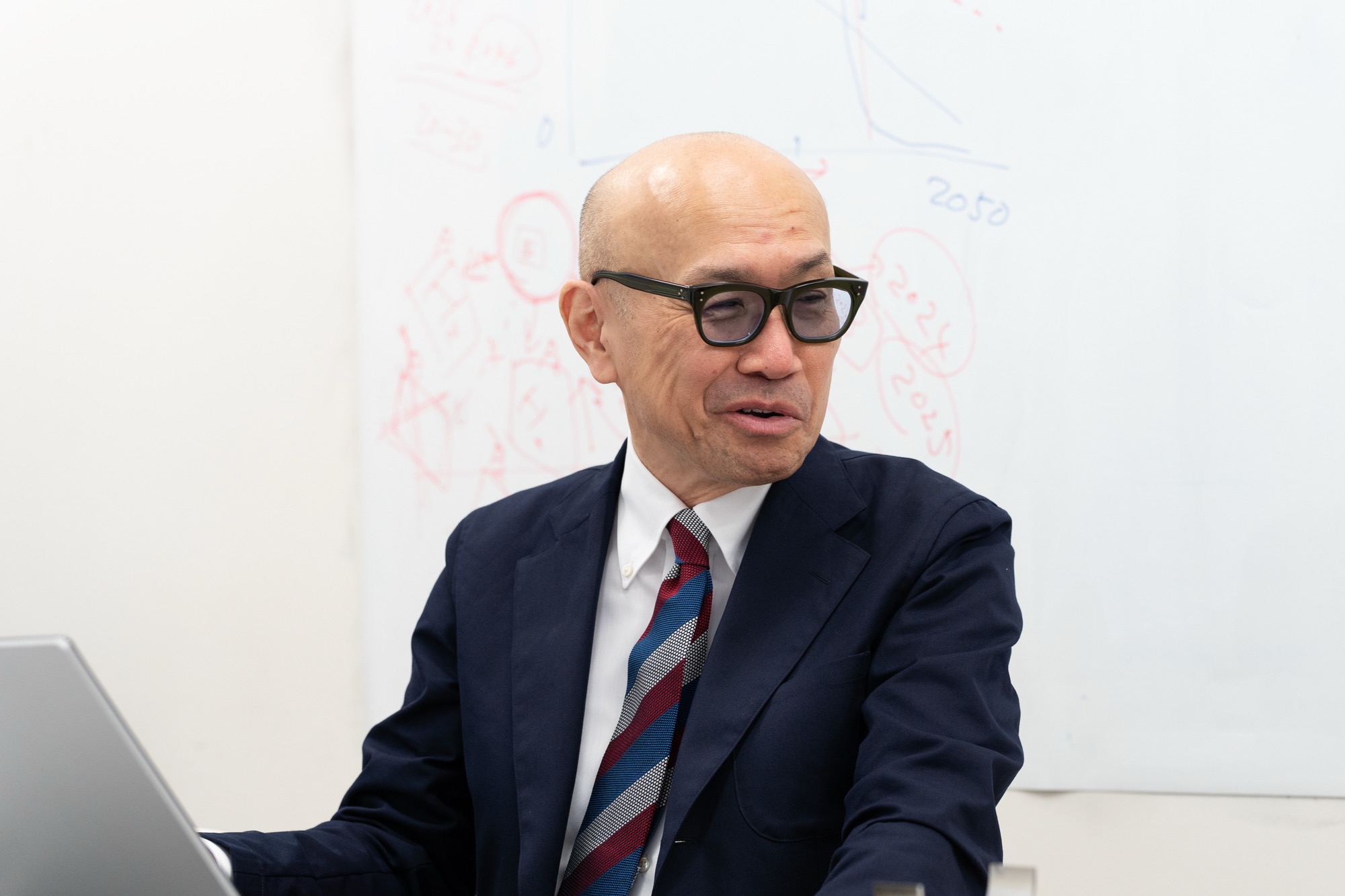
It will still take time for hydrogen to become widely adopted as an engine fuel in place of gasoline and diesel. Considering the cost of hydrogen and the infrastructure required to supply it, Professor Mihara believes that it may not become readily accessible to everyone until after 2040. This is precisely why it is important not to rely on hydrogen alone, but to combine a diverse range of options, including biofuels, synthetic fuels, environmentally compatible lubricants, and ultrafine bubbles.
Carbon neutrality cannot be achieved through a single technology. It will require the steady accumulation of practical technologies, grounded in an understanding of the machinery actually used throughout society. Professor Mihara notes that Japan’s hydrogen-related and internal combustion engine technologies continue to demonstrate a high degree of originality. Translating research outcomes into benefits for society, however, cannot be accomplished by a single university or company. Universities must bring together their respective areas of expertise, while companies must share the problems they genuinely need to solve. Research must then advance through collaboration between industry and academia, as well as among universities.
Professor Mihara’s laboratory frequently receives proposals for joint research from companies, other universities, and overseas research institutions. Its members engage directly with engines and build what they need themselves when no suitable technology or equipment exists. This approach attracts researchers and companies from Japan and abroad.
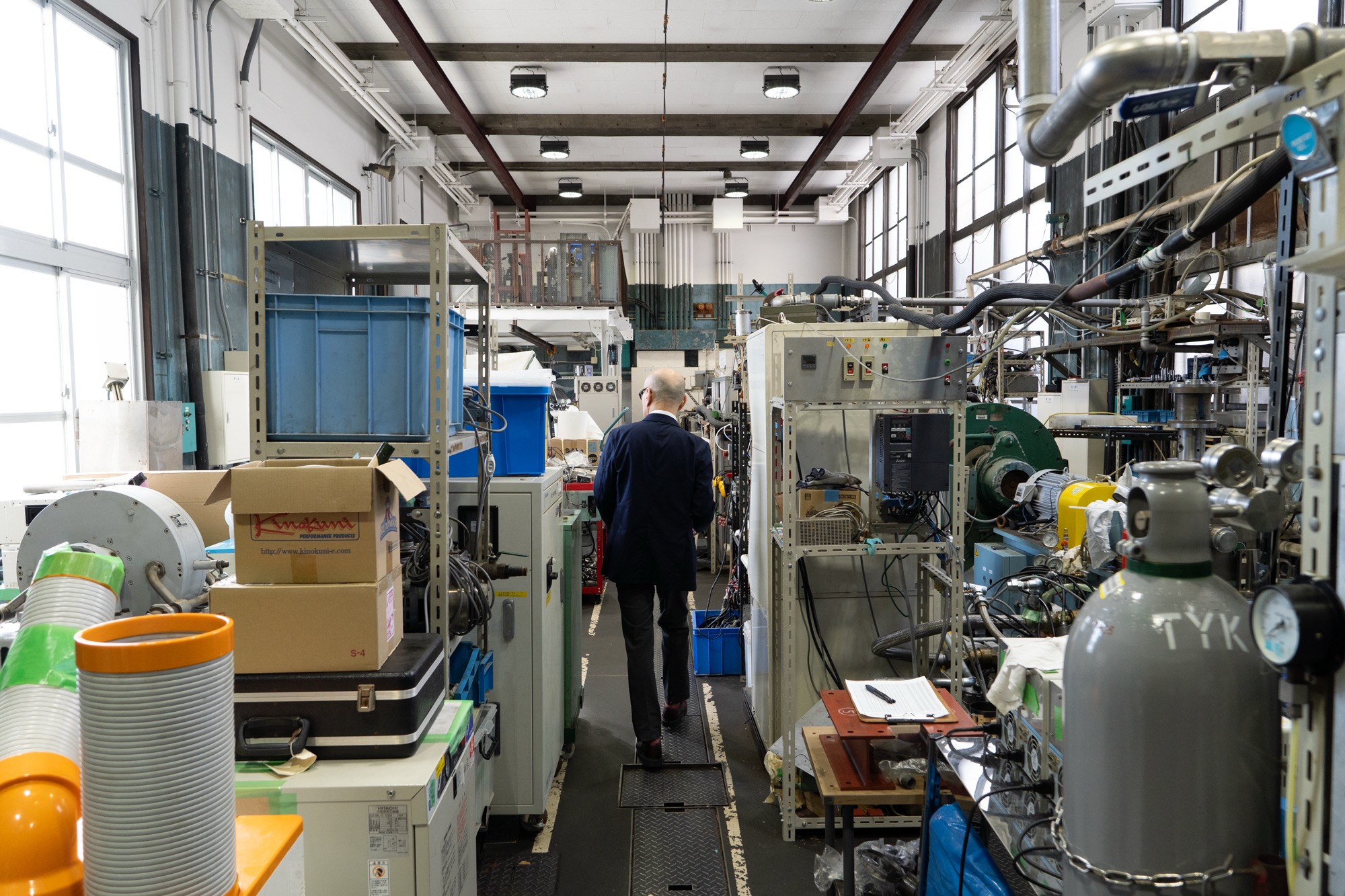
Taking on something others have declared impossible and seeing the experimental data reveal a new path is one of the greatest sources of fulfillment in Professor Mihara’s life as a researcher. His work measures and clarifies the invisible phenomena occurring inside engines and translates that understanding into technologies that can be used in society.
In addressing the far-reaching objective of carbon neutrality, Professor Mihara’s research does not rely on idealistic arguments. Instead, it responds through rigorous technological development firmly grounded in actual machinery. The future of the internal combustion engine cannot be created merely by changing its fuel. It requires an understanding of the many phenomena occurring inside the engine and the ability to design the entire system with reliability in mind. This painstaking yet original research will help power the next era.

Professor, Department of Mechanical Engineering, Faculty of Science and Engineering, and Mechanical Engineering, Graduate School of Integrative Science and Engineering. Director of the Research Center for High Efficiency Hydrogen Engine and Engine Tribology, Advanced Research Laboratories. He completed the doctoral program in Mechanical Engineering at the Graduate School of Engineering, Musashi Institute of Technology, in 1995 and received a Doctor of Engineering degree. After serving in positions including Associate Professor at Musashi Institute of Technology, he assumed his current position in 2011.