Machine
What Drives a Sustainable Future?
Faculty of Science and Engineering ProfessorITO Akemi

All English text on this page has been translated automatically. Some sentences may be unnatural.
What comes to mind when you hear the words “mathematical research”? It is easy to imagine that it differs from the arithmetic and mathematics we learned in elementary, junior high, and high school. In mathematical research, the answers are not given in advance. Researchers discover previously unknown properties and laws and establish their validity through logical proofs. The theories developed through this process lead to further discoveries by other researchers, gradually expanding the frontiers of knowledge. Associate Professor Mitsuo Izuki of the Faculty of Liberal Arts and Sciences has devoted many years to fundamental research in a branch of mathematics known as real analysis.
In October 2026, Associate Professor Izuki was named among the world’s top 2% of scientists in the field of basic analysis in a list compiled by researchers at Stanford University in the United States and published by the academic publisher Elsevier. The list assesses the academic impact of researchers worldwide using a combination of indicators based on citation data from Scopus, Elsevier’s academic literature database, and factors related to co-authorship. The news came as a surprise to Izuki himself, who learned of his inclusion through a longtime research collaborator. Without his realizing it, the research he had once pursued on his own had reached researchers around the world. “It was completely unexpected. I never imagined that I would be included in the list.”
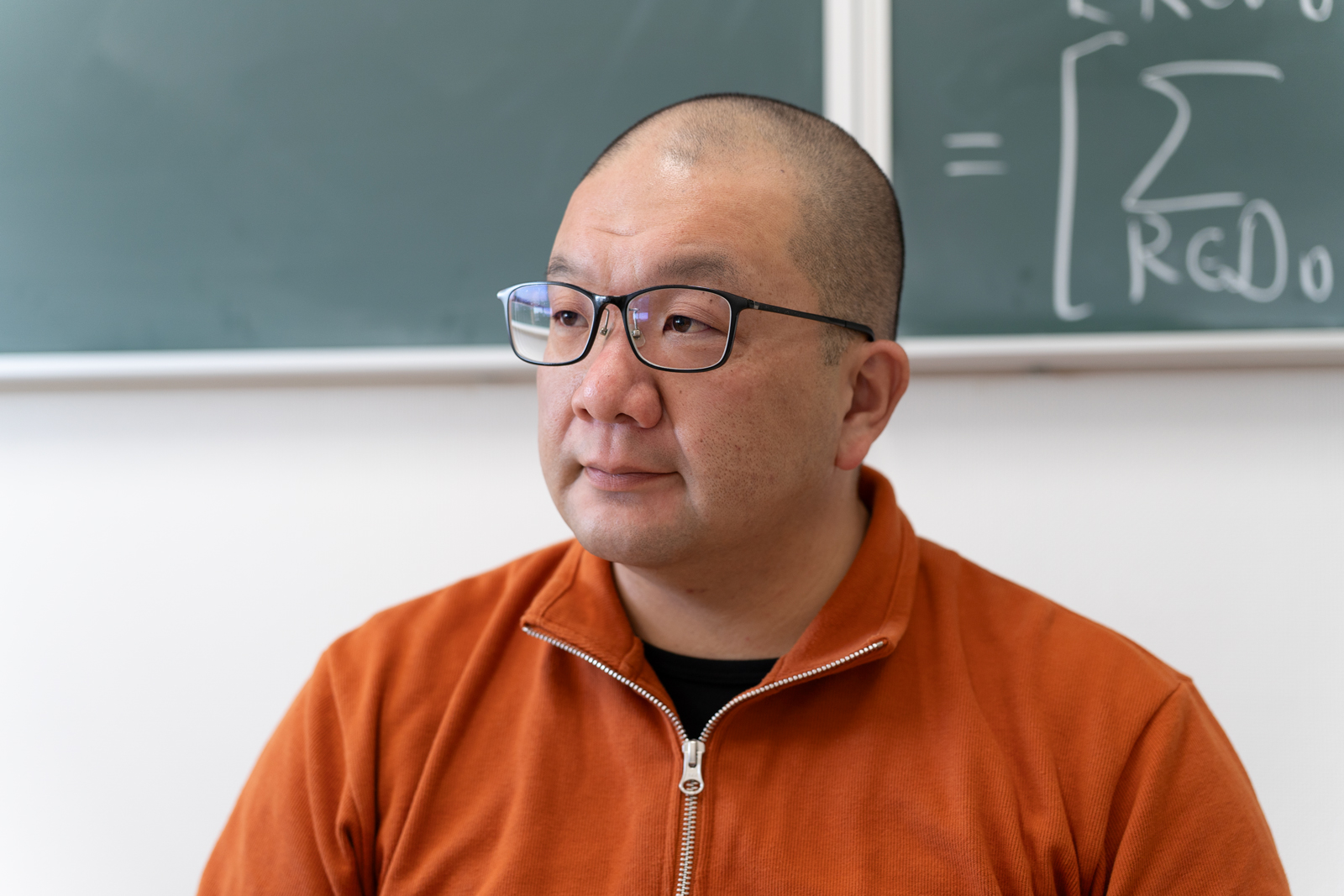
Real analysis, Izuki’s area of expertise, is a branch of mathematics that takes concepts such as differential and integral calculus as its starting point to investigate the properties of real numbers and functions in detail. A function is a relationship that assigns exactly one value y to each value x. Rather than studying individual functions alone, Izuki has focused on “function spaces,” which are collections of functions with certain properties, seeking to identify the properties and laws common to them. In particular, he has developed theories to investigate properties of functions that were difficult to study within conventional mathematical frameworks. A mathematical technique known as wavelets plays an important role in his research. By representing complex functions as combinations of functions with certain properties, wavelets make it possible to capture their finer characteristics. Through his research using wavelets, Izuki has revealed various properties of function spaces. In particular, he has published numerous studies on function spaces with variable exponents, contributing to the advancement of the theory of real analysis.
These research findings do not immediately translate into products or technologies. However, extending mathematical theories provides a foundation for investigating problems that were previously difficult to address. Papers authored by Izuki and his collaborators have been cited by researchers in China, Europe, and elsewhere around the world, leading to further research. Academic books featuring his research findings have also been published overseas. “It is gratifying to see researchers around the world embarking on new research inspired by my work.”
Izuki’s interest in pursuing mathematical research began after he entered university. When choosing his area of specialization in his third year as an undergraduate, he became interested in mathematical analysis, feeling that it was a field in which he could deepen his understanding through sustained effort. When lectures alone were not enough to understand a particular concept, he studied academic textbooks independently and worked through calculations repeatedly. During the interview, he showed us the textbooks he had used at the time, along with notebooks filled with mathematical formulas. “Mathematics can be broadly divided into three areas: algebra, geometry, and analysis. Algebra studies numbers and the rules governing calculations; geometry examines the properties of shapes and spaces; and analysis explores functions and changes in quantities. As an undergraduate, I was surrounded by talented students, while there was so much that I did not understand. I became interested in analysis because I felt that I could deepen my understanding through persistent effort.”

After graduating from university, Izuki continued his research in graduate school and earned a doctoral degree. However, he recalls that his career as a researcher was not always smooth. Despite the challenges, he continued his research, explored new problems, and kept writing academic papers. His widely cited research on variable exponents was also conducted during such a period. Today, in addition to his longstanding work on the theory of function spaces, he is expanding his research into mathematics related to artificial intelligence (AI) and neural networks. This new direction grew out of an encounter with a fellow researcher at Tokyo City University. Their exchange began when a professor specializing in intelligent informatics attended one of Izuki’s lectures, eventually developing into collaborative research involving researchers from other universities. Izuki explains that he is still learning about specific applications from researchers in other disciplines. By bringing together their respective areas of expertise and engaging in ongoing discussions, they are exploring new possibilities for research.
These exchanges have also broadened his interests in education. Izuki places particular importance on the willingness to investigate and verify things independently rather than leaving questions unresolved. He believes that students studying AI and data science should not simply run computer programs but also understand the mathematics underlying their calculations. He is currently considering writing a book for learners in these fields that bridges the gap between the fundamental mathematics taught at university and its practical applications. “I think it is important not to leave things you do not understand unresolved, but to look into them yourself, work through the calculations, and verify them.”
The pursuit of mathematics that began with notebooks filled during his student years has now connected Izuki with researchers across the globe and opened up opportunities to engage with new areas of research, including neural networks and AI. It is impossible to predict when, where, or whose next discovery a particular piece of research might inspire. That is precisely why there is value in confronting the questions at hand and continuing research with dedication and persistence. Izuki’s journey illustrates the value of fundamental research, whose impact is not always immediately visible, and the possibilities inherent in the pursuit of knowledge.
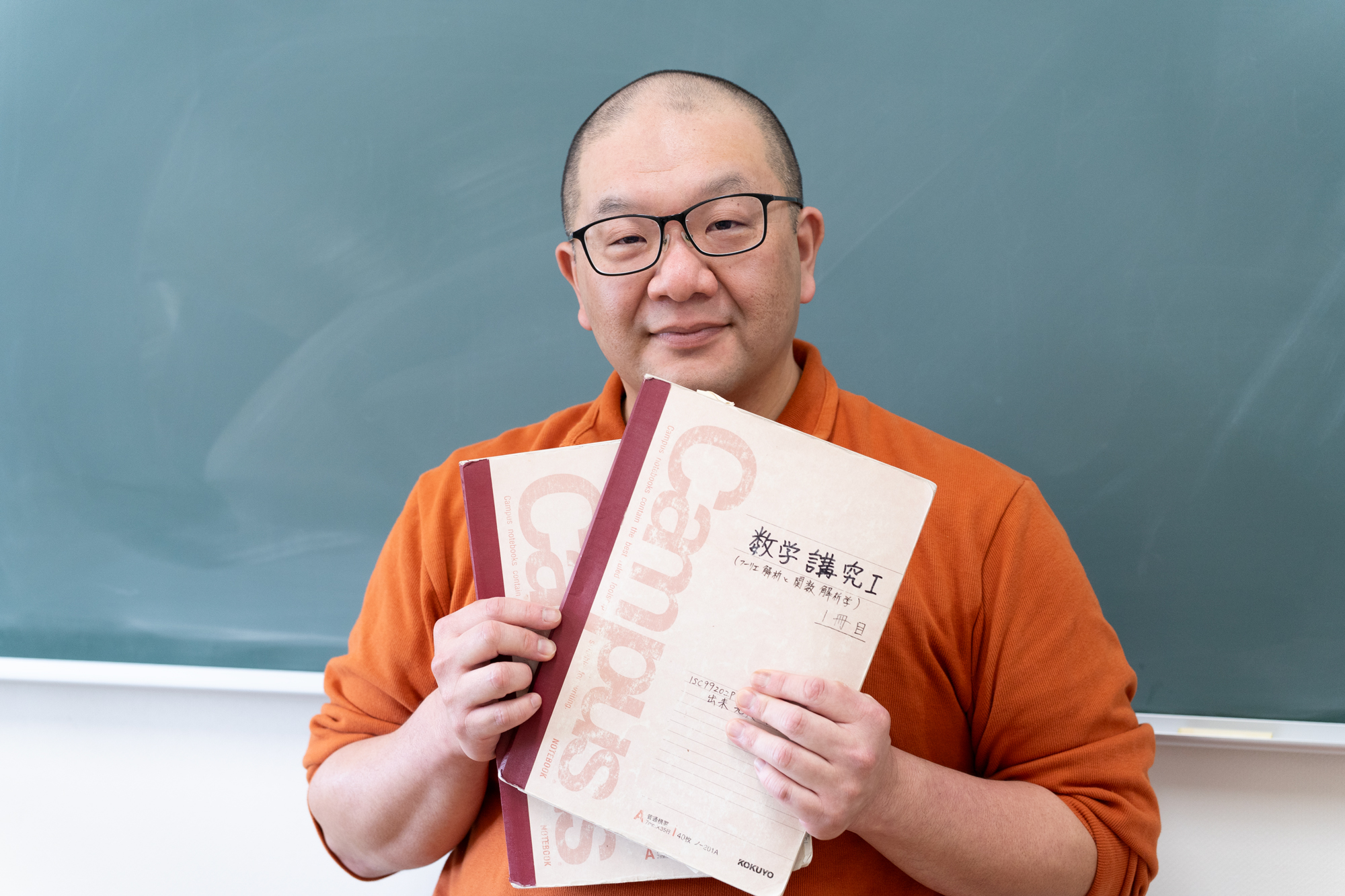
Associate Professor, Faculty of Liberal Arts and Sciences, and Natural Sciences, Graduate School of Integrative Science and Engineering. Visiting Associate Professor, Osaka Central Advanced Mathematical Institute (OCAMI), Osaka Metropolitan University. In 2008, he completed his doctoral program at the Graduate School of Science, Hokkaido University, and earned a Ph.D. in Science. After serving as Assistant Professor at the School of Engineering, Tokyo Denki University, Associate Professor at the Graduate School of Education, Okayama University, and Visiting Associate Professor at Osaka City University, among other positions, he assumed his current position in 2019.