Measurement / Analysis
Uncovering Subtle Electric Signatures to Open New Frontiers in Space Science
Faculty of Science and Engineering / Advanced Research Laboratories ProfessorMIYAKE Hiroaki

All English text on this page has been translated automatically. Some sentences may be unnatural.
Generative AI is rapidly transforming our daily lives. Its impact is also being felt in the learning of English and other foreign languages. Learners can now have their English writing corrected almost instantly, ask questions in Japanese when they encounter unfamiliar expressions, and practice English conversation as many times as they wish without worrying about keeping another person waiting. AI can also assist with pronunciation, vocabulary, and even question-and-answer practice for presentations. Learning opportunities that were once difficult to access outside classrooms, study-abroad programs, or language schools are now becoming available directly on each learner’s own device. But does simply using AI naturally improve one’s English proficiency? How do learners read the English sentences suggested by AI, what do they notice, and what do they actually acquire? Professor Yukinobu Satake of the Department of General Education is exploring English education in the age of AI by examining the learning processes that take place beneath the surface.
Professor Satake’s research investigates how machine translation and generative AI can be used in English education from the perspectives of second language acquisition and writing instruction. Of particular importance to him are learners’ cognitive processes—elements of learning that cannot be captured by scores alone. In his current research, he compares learning in which students refer to English sentences generated by AI or machine translation with conventional learning based on feedback from teachers. In addition to evaluating English writing performance, he measures changes in cerebral blood flow during the learning process. For this purpose, he uses a device known as NIRS, or near-infrared spectroscopy, which uses near-infrared light to monitor brain activity. His research primarily measures blood flow around Broca’s area, a region considered to be involved in grammar, syntactic processing, and language production, to investigate what kinds of activity occur in the brain while learners engage with English sentences. However, cerebral blood-flow data alone cannot reveal the full picture of the learning process. After each experiment, Professor Satake therefore reviews recordings of the learning session, eye-tracking data, and NIRS measurements together with the participant, asking what they were thinking at moments when blood flow increased or decreased. Even when cerebral blood flow rises during a particular period, numerical data alone cannot reveal whether the learner was thinking about sentence structure, reacting to vocabulary, or directing attention to something else. By combining the learner’s own account with the physiological data, he aims to develop a more multidimensional understanding of the effects of AI-assisted learning. “There are aspects that NIRS alone cannot tell us. That is why we need to ask learners what they were thinking at that particular moment and compare their responses with changes in cerebral blood flow.”
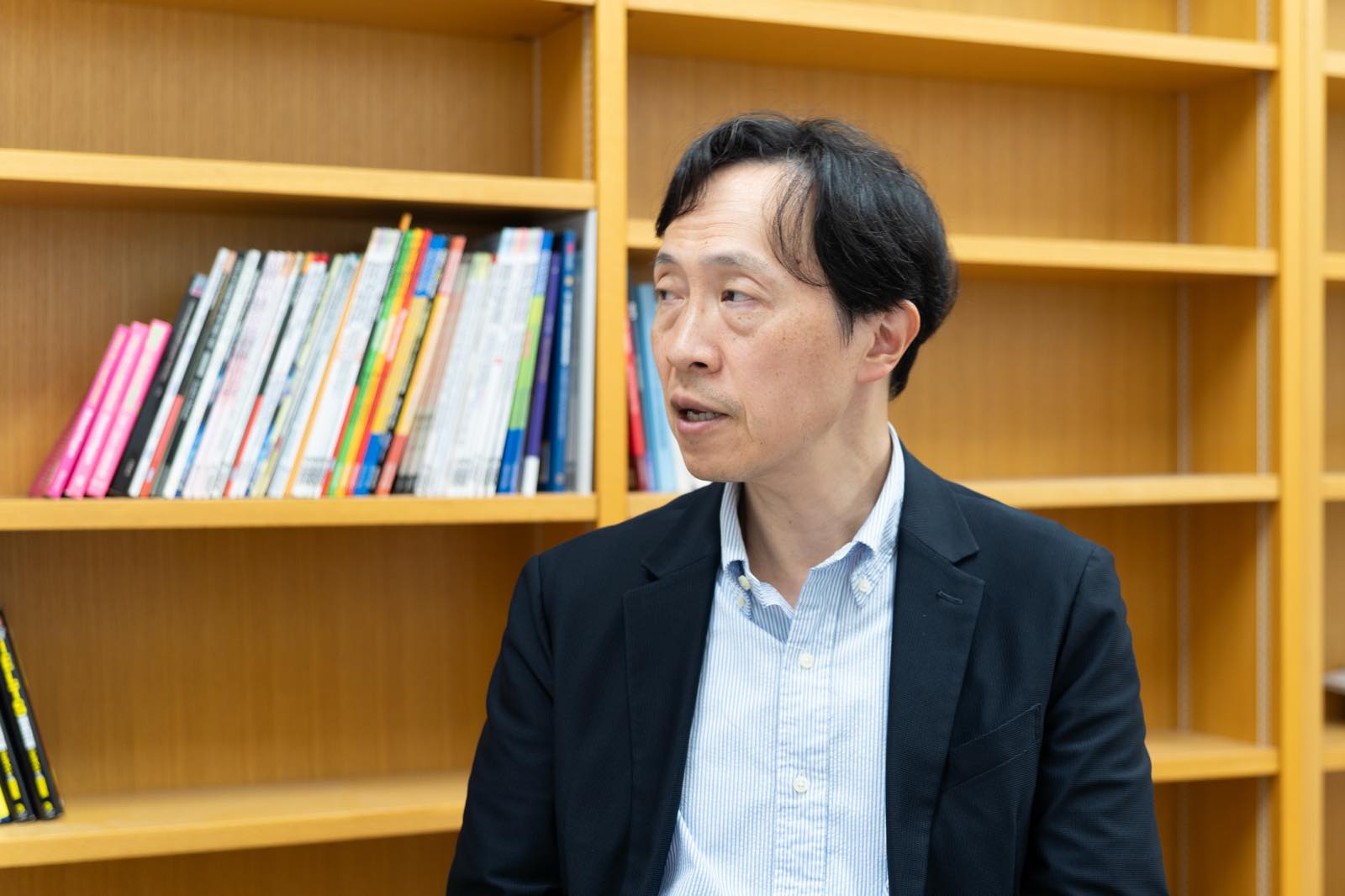
According to Professor Satake, his research so far has revealed both the strengths and the challenges of AI and machine translation. One major strength is the richness of expression they can provide. English sentences generated by AI often contain natural expressions and vocabulary that learners may rarely encounter in textbooks alone. For example, for the Japanese phrase meaning “an in-depth discussion,” AI may suggest the expression “in-depth discussion.” A learner may understand such an expression when seeing it, yet find it difficult to produce spontaneously when writing in English. Many participants have commented that they encountered unfamiliar words and expressions and found them educational. In fact, learners who were shown model sentences produced by AI or machine translation tended to receive higher vocabulary scores in writing tasks immediately afterward. AI allows learners to encounter, within a short period of time, expressions that they might struggle to reach using only the knowledge they already possess.
At the same time, although improvements in vocabulary can be observed immediately after learners see AI-generated model sentences, Professor Satake has found that this advantage tends to be difficult to sustain approximately one month later. In contrast, when learners receive feedback from a teacher, they recall the English sentences they originally wrote, return to the intended meaning in Japanese, and reread their work while considering grammar, word order, and how the teacher’s comments relate to their writing. This process places a cognitive burden on learners as they reconstruct what they have written. Measurements of cerebral blood flow likewise showed a tendency for higher blood-flow levels among the group reading teacher feedback. Professor Satake does not interpret this simply as evidence that “learning with AI is shallow.” Rather, he suggests that viewing AI-generated English may make learners more likely to notice vocabulary and expressions, while teacher feedback may encourage deeper processing of grammar and sentence construction. “There is tremendous value in looking at an English sentence produced by AI and realizing, ‘So this is another way to express it.’ But if the learning stops at simply looking at the expression, the effect may only be temporary. What matters is actually using it afterward.”
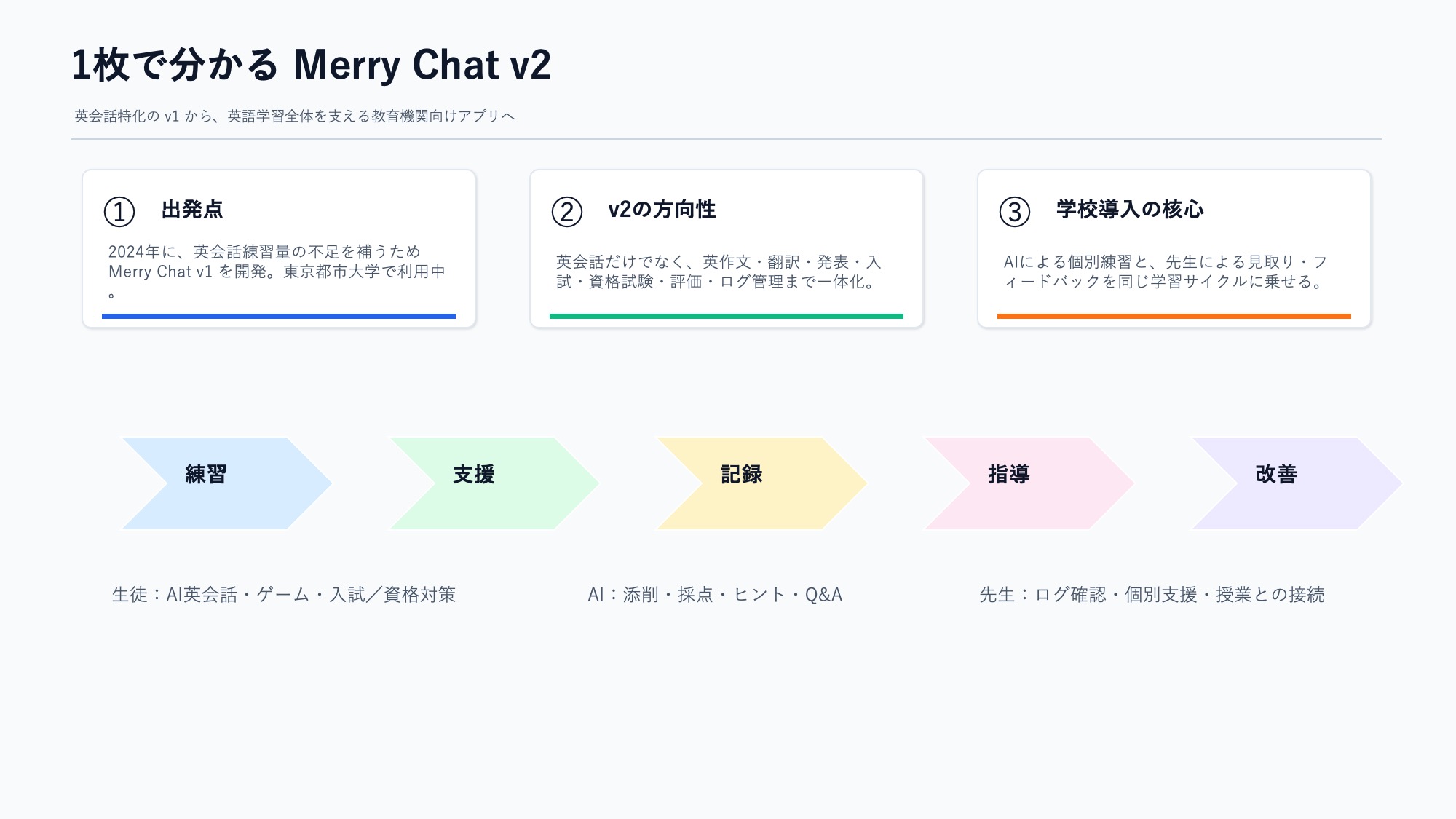
AI can provide learners with a rich variety of expressions. However, for those expressions to become part of a learner’s own language, the learner must use them repeatedly, try them in different contexts, and return to them again after some time has passed. Professor Satake’s goal is not to use AI merely as a ghostwriter or translation tool. Rather, he seeks to scientifically determine what kinds of learning activities are necessary for people to genuinely acquire English proficiency in an age when AI is readily available. One initiative that embodies this approach is “Merry Chat,” an English-learning system that makes use of generative AI. The word “Merry” reflects the idea of enjoyment. Beginning with the experience of communicating enjoyably in English, the system is being developed to offer a broad range of learning functions, including English conversation, writing, translation, presentations, and preparation for proficiency examinations. In its conversation function, vocabulary difficulty can be adjusted according to the learner’s level, while users can also specify topics, situations, grammar they wish to practice, conversation speed, and voice settings. If learners are unsure how to respond during a conversation, they can ask a question in Japanese, receive an explanation, and then return to communicating in English. Rather than forcing learners to continue exclusively in English, the system is designed to supplement understanding in Japanese when necessary before guiding them back to activities in which they actively use English.

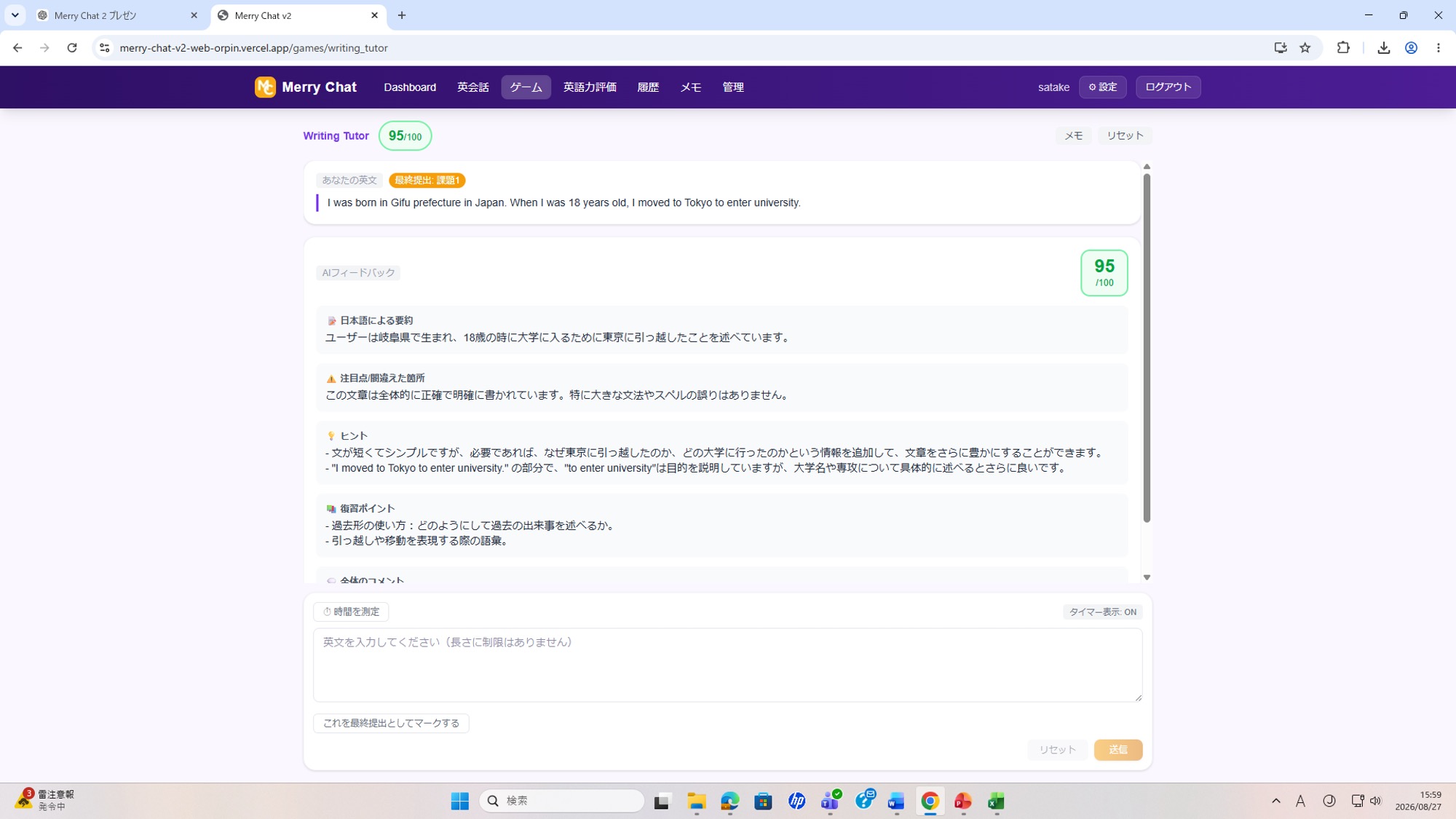
In the writing function, learners can submit English sentences and receive corrections and suggestions for improvement from AI, allowing them to develop their expression through repeated revision. The presentation function provides feedback on presentation content as well as opportunities to practice question-and-answer sessions, an area that Japanese learners often find particularly challenging. The system also supports practice in speaking, listening, summarization, and English composition for examinations such as EIKEN, TOEFL, and IELTS. Another distinctive feature is that it not only allows learners to practice independently but also provides teachers with administrative functions through which they can review learning histories, submitted work, assessments, and common difficulties. Unlike English-conversation applications designed primarily for individual users, Merry Chat has been developed specifically with the use of AI in school education in mind.
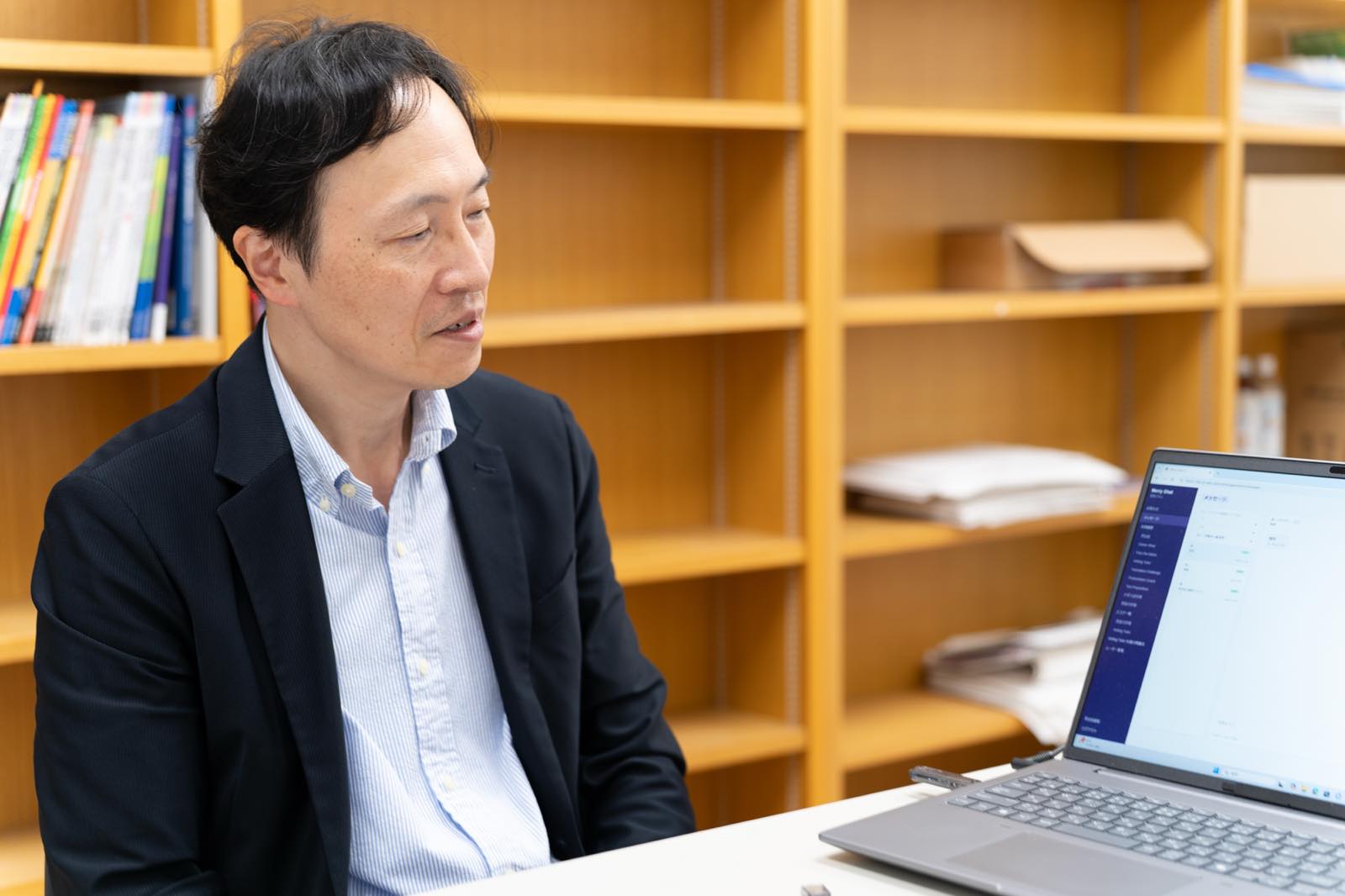
Another major characteristic of the system is Professor Satake’s direct involvement in its development. Although programming has not traditionally been his field of expertise, he has added functions and developed the interface and administrative features by giving instructions to generative AI in Japanese. Where do teachers encounter difficulties in actual classrooms? Where do students tend to struggle? What kinds of administrative functions are necessary for classroom use, and what support is needed to help learners continue studying? It is precisely because Professor Satake possesses expertise in English education that he is able to determine what AI should be asked to build. “What will matter from now on, I believe, is not allowing ourselves to be controlled by AI, but finding ways to integrate AI with the experience and knowledge we already possess. That is where new added value can emerge.”
The role of teachers in English education is also likely to change. AI can support a wide range of learning activities, including conversation practice, English writing correction, pronunciation, vocabulary development, and preparation for proficiency examinations. Precisely because AI can provide this support, teachers will increasingly be expected not simply to provide correct answers, but to act as designers of learning experiences that help students understand, use, and retain the expressions suggested by AI. For students in science and engineering in particular, the challenge extends beyond English expression itself to explaining specialized subject matter in English. Because AI possesses knowledge across a broad range of fields, it may be able to assist students in determining how to explain specialized presentation content and in practicing responses to questions. The use of AI may therefore open new forms of learning that connect specialized education in science and engineering with English-language education.
Looking ahead, Professor Satake hopes to establish a university-wide model of AI-assisted English education and evaluate its effectiveness. If the results demonstrate clear benefits, he aims eventually to extend the model to other research and educational institutions. Such evaluation will involve examining test results, analyzing learning logs, and conducting questionnaires and interviews to determine how the use of AI changes learners’ attitudes toward English learning, what changes occur in their English proficiency, and which functions prove most effective. The important point is not simply to introduce AI and stop there, but to continue improving the system by examining both its educational effects and the practical challenges of implementation on the basis of actual learning data.
Professor Satake’s strong interest in AI can be traced back to the sense of astonishment he experienced when he first encountered the dramatic evolution of machine translation. Earlier machine-translation systems often produced unnatural results, but translation technology based on neural networks fundamentally changed the quality of their output. Suddenly, English sentences appeared almost instantaneously that were so natural he felt he could not have translated them as smoothly himself. That experience led him toward research on incorporating AI into English education. Rather than prohibiting AI, he believes it is important to accept that the technology already exists and then consider what human beings can do in that environment. This perspective lies at the heart of his approach to research.
In Japan, opportunities to use English in everyday life remain limited even for those who study the language. Without a clear purpose for using English, even the most sophisticated tools are unlikely to lead to sustained learning. AI is ultimately only a means to an end, and learners themselves must discover why they want or need to use English. Professor Satake encourages younger generations to venture into unfamiliar fields, whether those involve AI, foreign languages, or something else entirely. By stepping into a new domain, people begin to see things that were previously invisible to them. English literature, second language acquisition, machine translation, and generative AI—Professor Satake’s own career has likewise developed through a series of experiences that only later became connected, ultimately leading to new directions in research.
AI is not merely a tool for making English education more convenient. It also provides an opportunity to reconsider where learners think, what they notice, and how they gradually acquire language as their own. By identifying what only human teachers can do and what AI is uniquely capable of doing, educators can redesign the structure of learning itself. Professor Satake’s research is an attempt to rethink English education in the age of generative AI not simply through the introduction of new technology, but by returning to the fundamental question of what it means for people to learn.
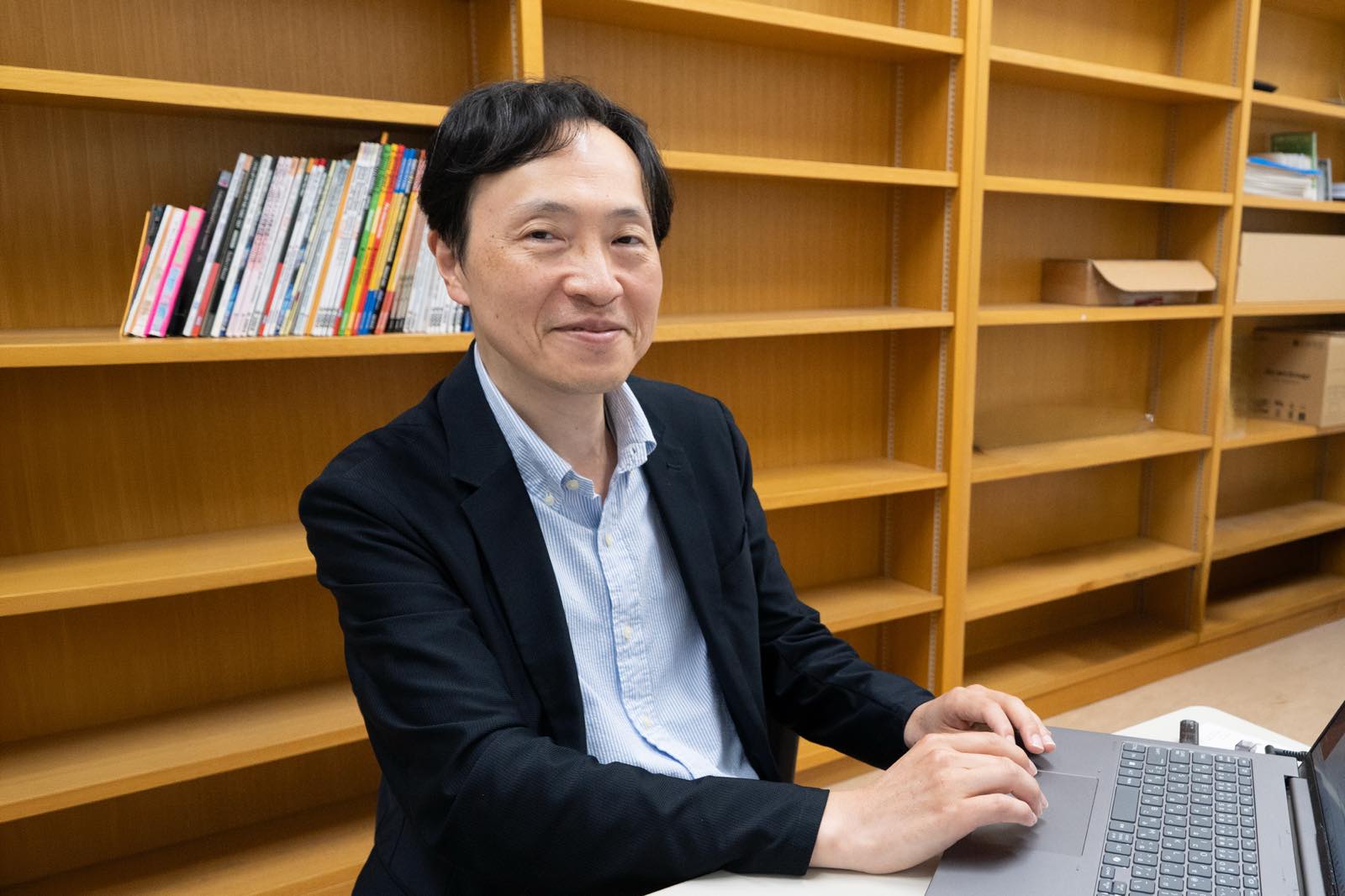
Professor, Foreign Language Education Center, Department of General Education, Tokyo City University. Director, Foreign Language Education Research Center, Advanced Research Laboratories, Tokyo City University. He received his Ph.D. from the Department of Language and Information Sciences, Graduate School of Arts and Sciences, The University of Tokyo, in 2017. After serving as an Academic Researcher at the Graduate School of Arts and Sciences, The University of Tokyo, and as a Lecturer at Jobu University, he joined Tokyo City University in 2023 in his current position.